Connections
Abnormal heating around terminals or connections may indicate a condition that needs electrical investigation.

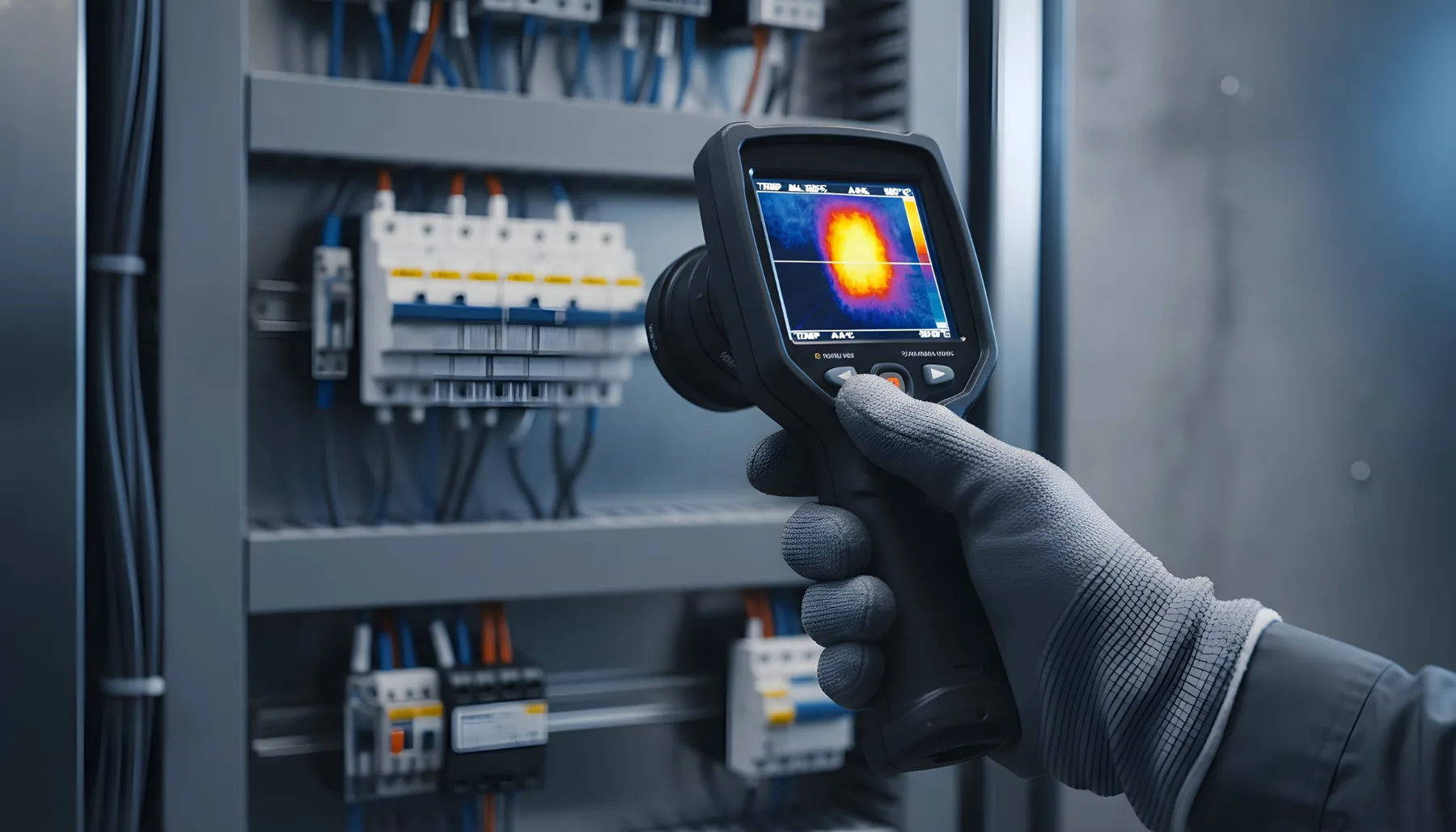

Thermal imaging can help identify unusual heat patterns in electrical switchboards and connected equipment, giving facilities teams another condition-inspection tool before a problem becomes an outage or urgent defect.
A thermal camera records surface temperature patterns. In electrical maintenance, those patterns can help a suitably qualified technician identify locations that deserve further investigation, especially when equipment is operating under representative load.
Abnormal heating around terminals or connections may indicate a condition that needs electrical investigation.
Temperature differences between similar components can provide useful context when reviewed with circuit loading and operating conditions.
Repeat inspection under comparable conditions can help facilities teams understand whether a previously identified issue is stable, worsening or resolved.
The significance of a thermal anomaly depends on equipment type, load, ambient conditions and the electrical cause. Findings should be assessed by an appropriately qualified person before repair decisions are made.
A strong report identifies the equipment, location, image reference, operating conditions, apparent anomaly, priority for further investigation and the status of corrective work.
Thermal imaging can sit inside a planned commercial electrical maintenance programme together with switchboard inspection, RCD testing, emergency lighting, fault response and defect rectification.
The broader Commercial Electrical Maintenance Checklist Sydney provides a facility-level starting point for planned maintenance scope.
Boards supplying essential operating areas, technology, public facilities or high-use equipment can justify closer condition monitoring.
Recurring trips, unexplained interruptions or previous heat-related findings may warrant further investigation.
Thermal imaging can add condition information to larger maintenance programmes when scope and reporting are consistent across sites.
Find the right testing service, plan ongoing maintenance and see examples of our work in schools.
Send the site address, number and location of switchboards, available drawings or previous reports, typical operating hours and access constraints. Note critical equipment and any previous heat-related findings so we can plan the inspection scope and reporting.