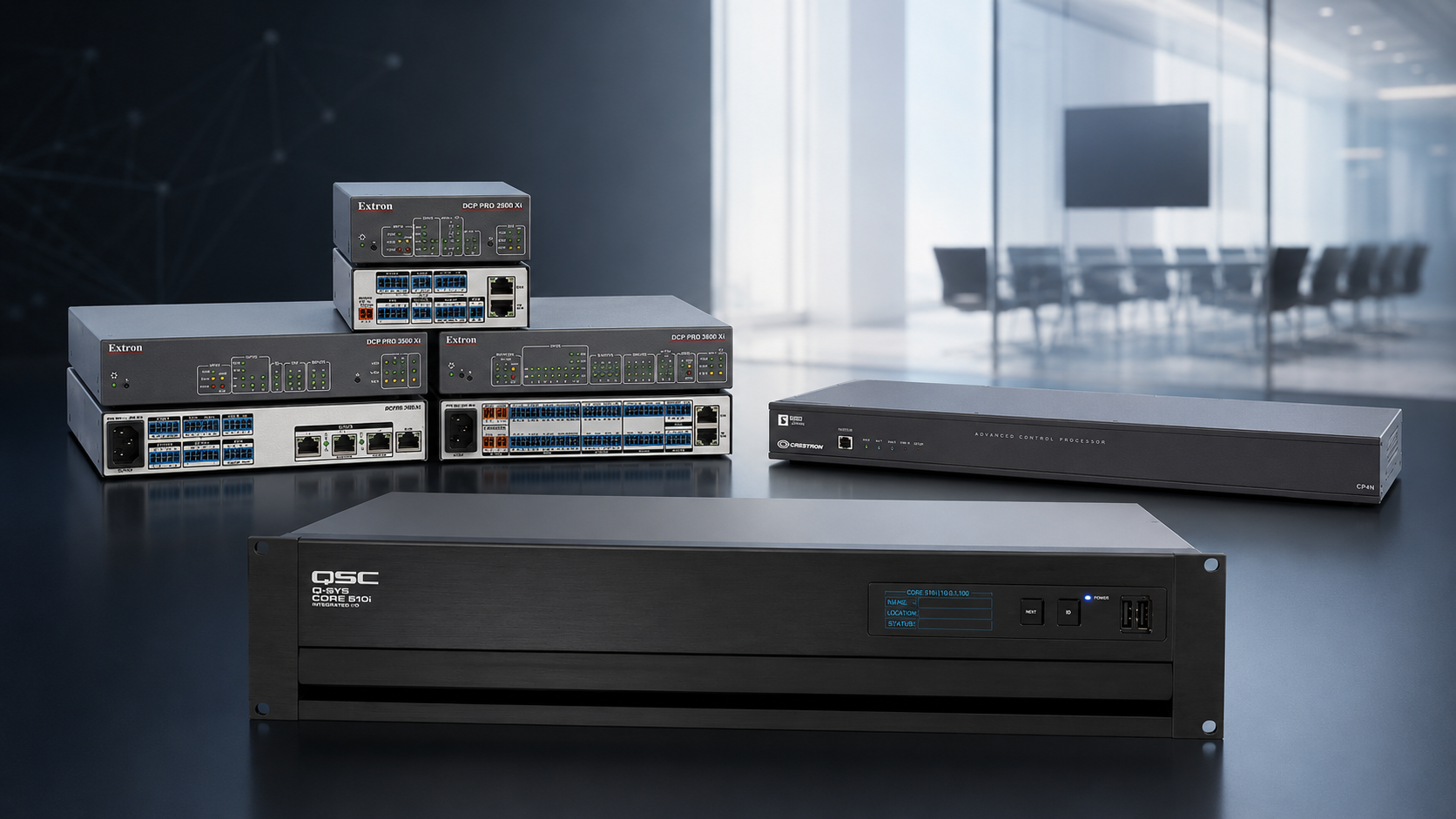
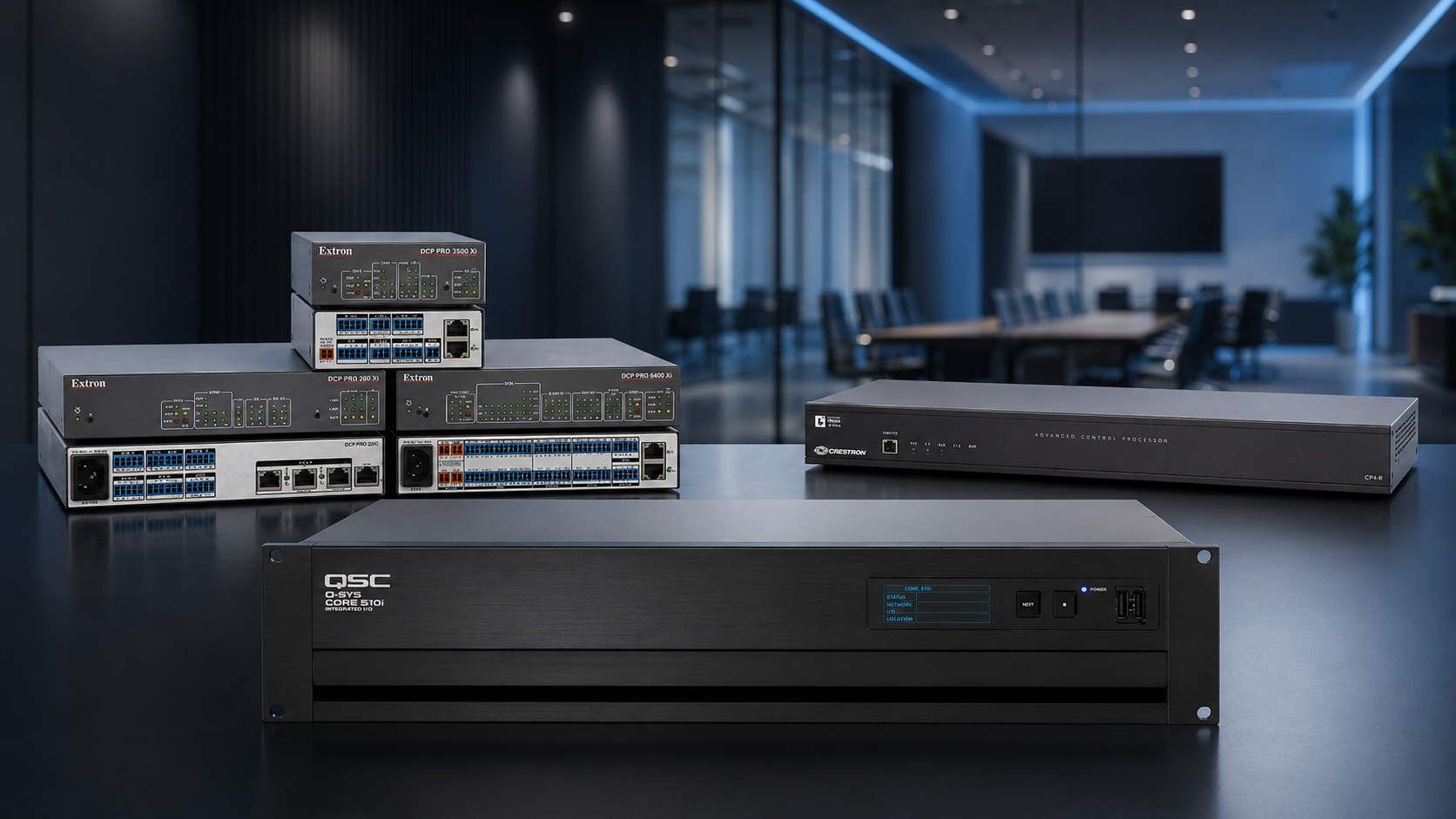
Q-SYS
A full-stack AV platform with integrated audio processing, control, network video, conferencing components and cloud-manageable system visibility.
Compare control, audio, video, programming and support considerations before choosing a platform.
Which AV Control Platform Fits Best?
Compare control, audio, video, programming and support considerations before choosing the platform that will shape your AV environment.
Q-SYS, Crestron and Extron can all deliver dependable professional AV, but they organise processing, control, signal distribution and enterprise management differently. This practical comparison examines architecture, programming, monitoring, documentation and long-term support before an organisation commits to a platform.
The direct answer
Q-SYS is commonly selected when audio, video, control and monitoring should operate within one software-led platform. Crestron is often chosen for deeply customised automation and enterprise room standards. Extron is frequently specified where dependable signal management, presentation switching and repeatable room control are central to the design.
A full-stack AV platform with integrated audio processing, control, network video, conferencing components and cloud-manageable system visibility.
A broad automation and control ecosystem suited to customised room logic, multi-system integration, enterprise standards and connected building workflows.
A professional AV infrastructure ecosystem recognised for control, presentation switching, signal extension, AV over IP, audio DSP and enterprise resource management.
There is no universal winner. A technically sound recommendation should explain why the selected architecture suits the users, rooms, network, operational risk, documentation requirements and future support strategy.
Compare the architecture
A useful enterprise AV control ecosystem comparison starts with the outcome required from each room and the organisation that will operate, manage and support it.
Decide whether it will provide control only, or also handle audio DSP, video distribution, cameras, conferencing, paging and remote monitoring.
A simple classroom, divisible training room and executive boardroom require very different levels of automation, feedback and interface design.
Confirm whether the design uses native platform DSP, a separate processor, Dante or AES67 audio, USB conferencing and acoustic echo cancellation.
Compare fixed switching, point-to-point extension and AV over IP, including latency, USB, image quality, redundancy and network requirements.
Review remote access, monitoring, firmware, alerts, reporting, licensing, help-desk visibility and responsibilities shared with IT.
Confirm ownership of source code, DSP files, passwords, drawings, backups, licence records and the process for future modifications.
Platform 01 · Integrated AV
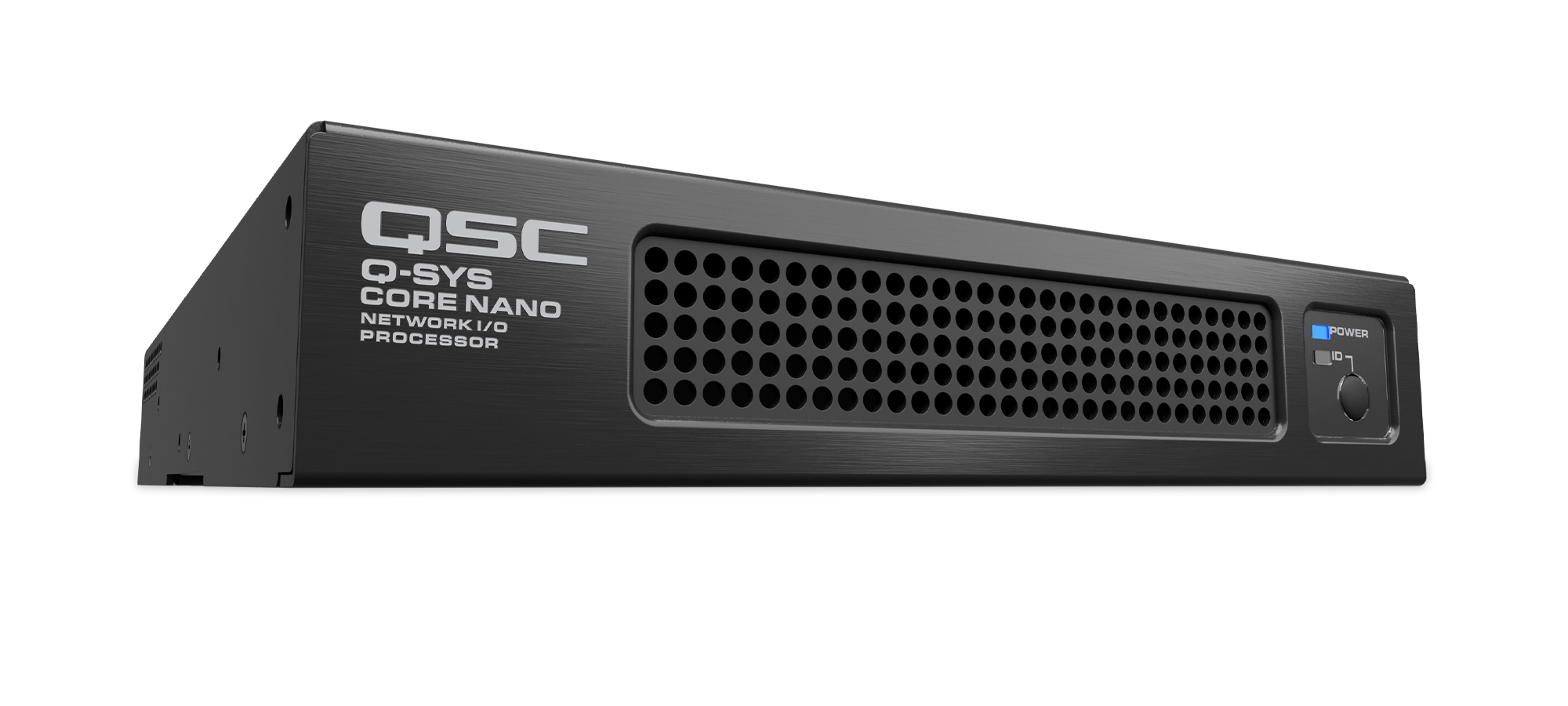
Q-SYS is structured as a software-based AV platform in which a Core processor can coordinate audio DSP, control logic, user interfaces, network video, compatible conferencing devices and system monitoring. Q-SYS Designer provides one environment for system design, DSP configuration, control development and UCI creation.
Platform 02 · Custom automation
Crestron is a programmable control and automation ecosystem capable of coordinating AV, conferencing, displays, lighting, blinds, scheduling, environmental systems and compatible building technologies. Its 4-Series processors support modular control architectures, while DM NVX, AirMedia, Crestron Flex and XiO Cloud extend the ecosystem into network video, collaboration and enterprise technology operations.
Platform 03 · AV infrastructure
Extron combines IP Link Pro control, TouchLink Pro interfaces, presentation switching, DTP3 signal extension, NAV Pro AV over IP, professional audio DSP and enterprise resource management. It is often considered where straightforward operation, repeatable room design and robust presentation infrastructure are priorities.
Side-by-side comparison
This table describes common architectural strengths. Final capability depends on the specific processors, endpoints, licences, firmware, programming and third-party equipment selected for the project.
| Comparison area | Q-SYS | Crestron | Extron |
|---|---|---|---|
| Platform centre | Software-led audio, video and control platform. | Programmable automation and connected-technology ecosystem. | Professional signal management, control and presentation infrastructure. |
| Audio and DSP | Native DSP, routing, AEC, mixing and network-audio workflows are central strengths. | Audio architecture depends on the selected Crestron or third-party DSP and integration design. | DMP Plus products can provide DSP, AEC, automixing, USB audio and network-audio options. |
| Video distribution | NV and NVM network-video endpoints within the Q-SYS ecosystem. | DM NVX network video and DigitalMedia presentation architectures. | NAV Pro AV over IP, DTP3 extension and presentation matrix systems. |
| Control development | Q-SYS Designer, UCI tools, plugins, block control and Lua scripting. | SIMPL, SIMPL#, SIMPL# Pro and HTML5 interface workflows. | Global Configurator for configured control and Global Scripter for programmed applications. |
| Enterprise management | Q-SYS Reflect services for compatible system monitoring and management. | XiO Cloud and supported enterprise management workflows. | GlobalViewer Enterprise for monitoring, help desk, scheduling and reporting. |
| Common design fit | Integrated DSP, control, conferencing, paging and multi-zone systems. | Highly customised automation, premium spaces and enterprise room standards. | Education, government and workplace presentation systems requiring dependable signal management. |
| Key project risk | Underestimating network, licence, processing and trained-programmer requirements. | Insufficient source-code access, documentation or programmer continuity. | Selecting the wrong balance between conventional distribution, NAV and control complexity. |
Application fit
Crestron can be a strong choice where room automation, lighting, blinds, scheduling and complex third-party control must operate as one premium experience. Q-SYS may be preferred where meeting-room audio, cameras, control and monitoring should share one platform. Extron can suit rooms built around dependable presentation, switching and clearly defined control workflows.
Extron is frequently considered for repeatable classroom and presentation-room standards. Q-SYS is well suited to audio DSP, paging, school halls, divisible spaces and connected campus audio. Crestron can support advanced lecture spaces, enterprise room standards and integrated automation.
All three platforms may be appropriate. Selection should focus on security, accessibility, recording, evidence presentation, conferencing, documentation, operational continuity and the availability of qualified support.
Q-SYS can consolidate audio processing, zoning, paging and room control. Crestron can coordinate complex venue automation and multiple technology systems. Extron can provide robust multi-display routing, presentation infrastructure and room-mode control.
Compare room templates, remote management, monitoring coverage, deployment processes, licence costs, standard replacement products, internal IT skills and the availability of programming support across every operating location.
The installed base matters. Reusing processors, touchscreens, network endpoints, source code or programmed modules may reduce risk, but unsupported hardware and missing files can make a staged migration more expensive than a clean platform transition.
Whole-of-life decision
A well-selected platform can still become difficult to support when the project lacks clear documentation, accessible files, tested backups and a defined change-management process.
Confirm delivery of control source code, DSP design files, interface assets, modules, drivers, compiled programs and current backups.
Handover should include signal flows, rack elevations, IP addresses, switch details, cable schedules, licences, credentials and device naming conventions.
Firmware, operating systems, conferencing platforms and device drivers should be reviewed together before changes are deployed to operational rooms.
A platform should be judged by how effectively it can be operated, diagnosed, modified and replaced over time—not only by how impressive the initial demonstration appears.
Before specifying a platform
Continue your research
Review Q-SYS system design, programming, DSP, control, network video and managed-support capability.
Explore Q-SYS →Explore Crestron control architecture, user interfaces, automation, DM NVX and enterprise support.
Explore Crestron →Review Extron control, NAV, DTP3, presentation switching, audio DSP and enterprise management.
Explore Extron →See how audio, video, control, electrical, communications and commissioning come together in one project.
Explore AV services →Compare design capability, programming, documentation, commissioning and support before appointing a contractor.
Read the integrator guide →Review commercial AV systems delivered across workplace, education, government and venue environments.
View AV projects →Frequently asked questions
None is universally better. Q-SYS is strong where integrated DSP, control, video and monitoring are priorities. Crestron is strong for deep custom automation and enterprise standards. Extron is strong in professional signal management, presentation systems and repeatable room control. The correct choice depends on the application and support model.
Yes. Commercial AV systems can combine platforms through supported network protocols, serial control, APIs, plugins and device drivers. A mixed system should have one clearly documented control hierarchy so faults and future changes remain manageable.
No. Q-SYS provides audio processing, control, user interfaces, network video, conferencing products and cloud-manageable monitoring within its broader AV platform.
No. Crestron also provides collaboration, AV over IP, wireless presentation, room scheduling, touch interfaces and cloud-based device management, in addition to programmable automation.
No. Extron offers control processors, touch interfaces, AV over IP, signal extension, presentation switching, audio DSP, room scheduling and enterprise resource-management tools.
Supportability depends on design quality, documentation, source files, monitoring, trained staff and access to qualified programmers. A simple, documented system on any of the three platforms can be easier to maintain than a poorly engineered system built on the supposedly simplest option.
The handover should define access to editable control source code, DSP files, user-interface assets, modules, device drivers, passwords, licences, IP schedules, drawings and current configuration backups.
Start with room functions, user workflows, audio performance, video distribution, network policy, monitoring requirements, cybersecurity, internal support skills, documentation and lifecycle cost. Product selection should follow those requirements.
Platform-neutral AV design
Masters Voice Technology designs, programs, installs and supports Q-SYS, Crestron and Extron systems. We can compare the required room workflows, network, audio, video, control and support outcomes before recommending a platform or a documented hybrid architecture.