01
Consultation
Defines the business objective, users, room functions, existing technology, budget and operational constraints.



Commercial AV Integrator Sydney
Choosing an AV integrator is not simply a comparison of displays, cameras and equipment prices. The right partner must understand your organisation, design the complete system, coordinate infrastructure, manage installation, verify performance and support the technology after handover.
Design Before Installation
Commercial AV design requires a coordinated understanding of room dimensions, acoustics, sightlines, camera coverage, signal distribution, control, power, data and user workflows.
Audio Design
The integrator should assess microphones, loudspeaker coverage, background noise, room acoustics and audio processing.
Video Design
Display size, mounting height, brightness and camera views should be based on the room rather than a standard equipment package.
System Architecture
The design must show how all components connect, communicate and recover when a device or service becomes unavailable.
For meeting-room projects, a useful benchmark is whether the integrator can explain display selection, microphone coverage, camera placement and the room’s operating workflow. Review How to Design a Meeting Room That Actually Works for a practical overview of these design considerations.
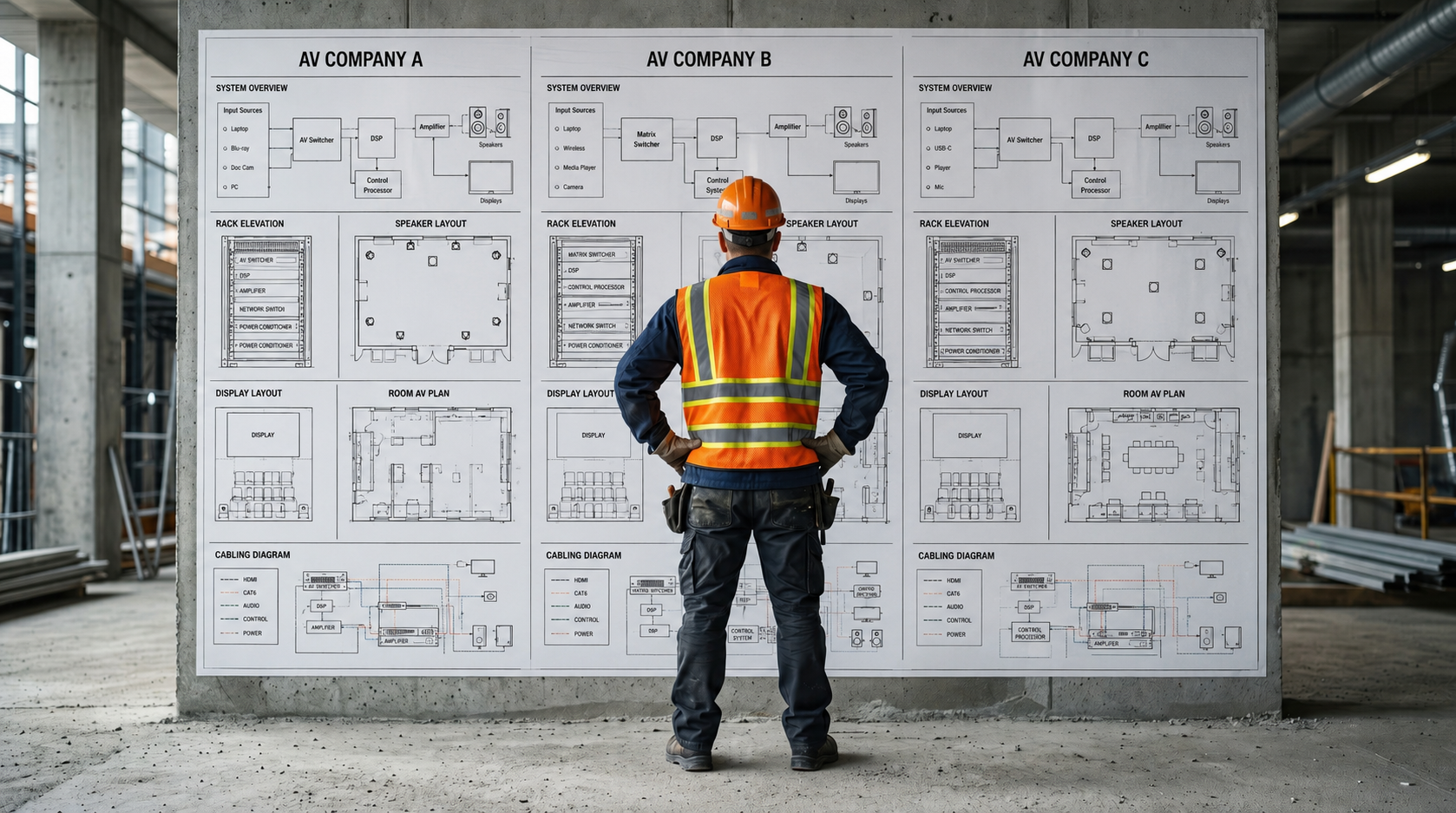
Larger projects may also require equipment schedules, rack elevations, reflected ceiling plans, connection details, network information and commissioning criteria before installation begins. Our AV consultant guide explains the documentation, procurement roles and design reviews to agree before requesting comparable proposals.
Evidence Over General Claims
Relevant project experience demonstrates that an AV integrator understands similar users, room types, operational pressures, compliance requirements and technical risks. Look for case studies that explain what was delivered, how systems were integrated and how the technology is supported after installation.
Corporate Workplace AV
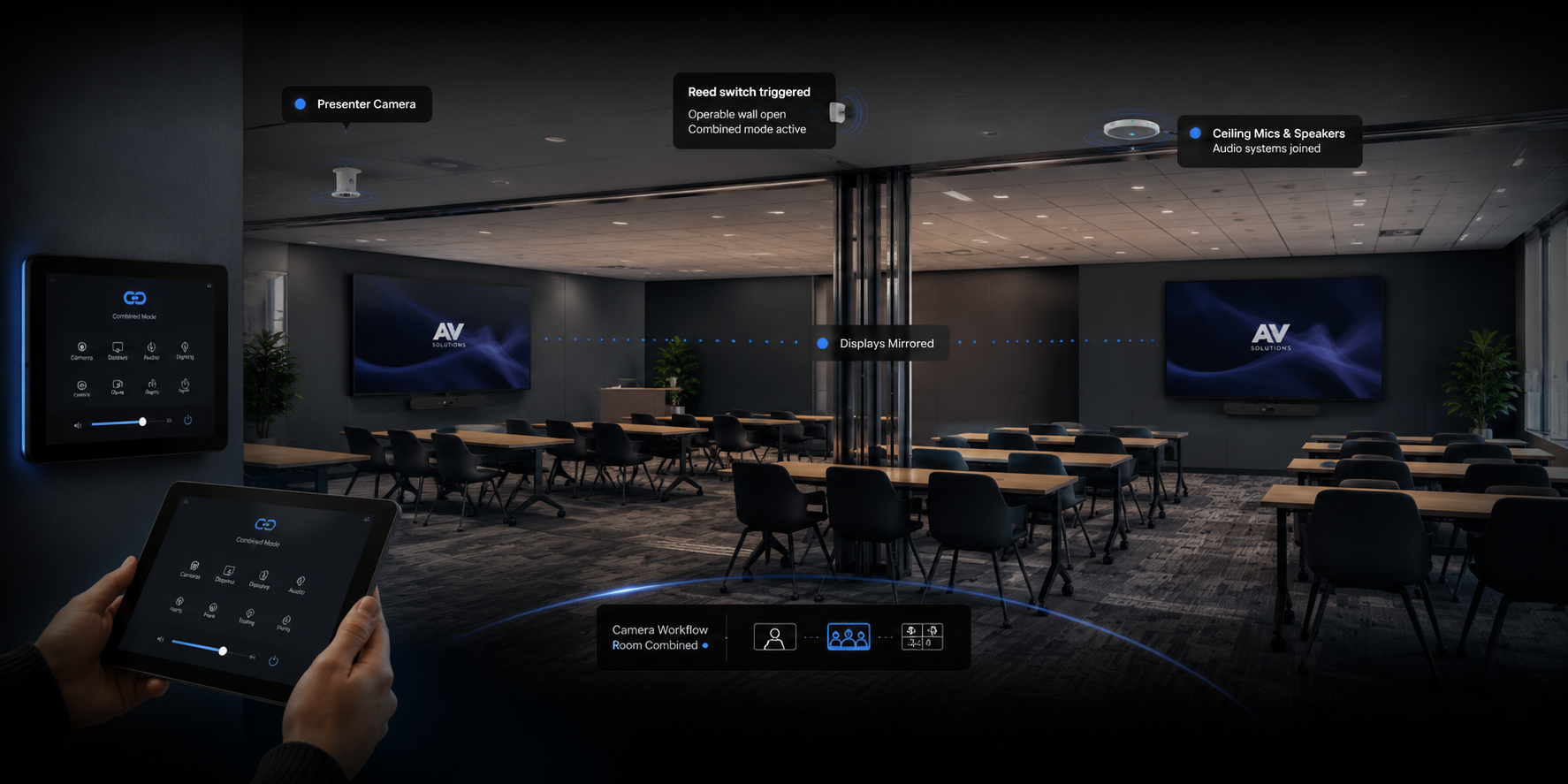
Microsoft Teams meeting rooms and Q-SYS-controlled divisible training spaces demonstrate experience across video conferencing, professional audio processing, cameras, displays, room automation and combined-space control.

Multi-Site Managed AV Service
This national support engagement combines help-desk response, remote fault investigation, digital signage player support, commercial display assistance, onsite service and reporting across a distributed AV network.

Government AV Integration
Court, hearing-room and government AV projects demonstrate experience with secure video conferencing, microphones, hearing assistance, displays, control systems, documentation and project delivery in active public-sector facilities.
When reviewing AV case studies, look beyond photographs and equipment lists. Ask what problem was solved, which parts of the project the integrator controlled, how the system was commissioned and what support was provided after handover.
References are most valuable when the client operates in a similar environment and can comment on system reliability, project communication, installation quality, documentation and ongoing technical support.
Review more commercial audio visual projects delivered across corporate, education, government, hospitality and community environments.
Compare Like With Like
Two proposals can appear to address the same project while including very different assumptions about design, cabling, programming, commissioning, documentation and support.
| Proposal item | What should be clear | Questions to ask |
|---|---|---|
| System scope | Rooms, systems, functions and outcomes included in the proposal. | Does the scope describe how users will operate the completed system? |
| Equipment | Manufacturer, model, quantity and intended role of each major component. | Are substitutions permitted, and how will they be approved? |
| Installation | Mounting, cabling, rack work, site labour, access equipment and installation hours. | Are wall supports, cable containment and after-hours work included? |
| Electrical and data | Power, network outlets, structured cabling and trade coordination. | Are these included, excluded or expected to be supplied by others? |
| Programming | Control logic, DSP configuration, user-interface development and conferencing setup. | Is custom programming included, and who owns the final files? |
| Commissioning | Testing, calibration, fault correction and documented verification. | What performance criteria will be tested before acceptance? |
| Handover | Training, drawings, equipment schedules, warranties and operating guides. | Which documents and configuration backups will be provided? |
| Support | Defects response, warranty assistance, remote support and ongoing maintenance. | Who should the client contact when a system fault occurs? |
Clear inclusions, exclusions and assumptions reduce disputes and make it easier to evaluate whether the final system meets the agreed requirements. A short product list with a single labour allowance leaves important parts of the project open to interpretation.
Make the shortlist comparable
This is an example for a commercial AV project, not a mandatory procurement method. Agree the criteria and weights before reviewing proposals, and adapt them to your organisation’s procurement rules.
| Criterion | Weight | Evidence to request |
|---|---|---|
| Design and workflow fit | 25 | A proposed room workflow, system drawings and a response to the functional brief. |
| Delivery team and coordination | 20 | Named project lead, relevant team experience, programme and trade responsibilities. |
| Commissioning and handover | 20 | Test plan, acceptance criteria, sample documentation and training scope. |
| Support and lifecycle | 15 | Service coverage, escalation process, ongoing fees and access to system files. |
| Comparable total cost | 20 | Itemised project price, exclusions, options and recurring costs over the same agreed period. |
Score each criterion from 0 to 5: 0 = no evidence; 1 = major gaps; 2 = partly demonstrated; 3 = meets the brief; 4 = strong relevant evidence; 5 = exceptional evidence against the agreed requirement. Multiply each score by its weight and divide by 5, then add the results.
For example, a design score of 4 out of 5 earns 20 of the available 25 points. Keep the supporting evidence and clarification questions beside each score so the reasoning can be reviewed.
Check mandatory eligibility requirements separately before scoring. Do not let a high total compensate for a failed requirement. Resolve missing scope and compare recurring fees, exclusions and assumptions before appointing a supplier.
For room-based projects, use the meeting-room AV cost guide to identify budget components, then confirm the actual scope in each proposal.
Select Technology for the Requirement
Commercial AV systems often combine products from several manufacturers. The integrator should understand the advantages, limitations and support requirements of each platform rather than recommending the same package for every room.
Confirm the technology suits the room size, users, operating environment and required performance.
Conferencing, control, networked audio and AV-over-IP systems should integrate without unsupported workarounds.
Consider product lead times, local distribution, spare parts, manufacturer support and replacement availability.
Review expected product life, firmware support, licensing and the process for replacing equipment in future.
Clarify ownership and access to drawings, DSP files, control programs, passwords and configuration backups.
Multi-room and multi-site organisations may benefit from repeatable room types, interfaces and supported equipment standards.
Masters Voice Technology works across Q-SYS, Crestron, Extron, AMX, Dante, Microsoft Teams Rooms, Zoom Rooms and other commercial AV platforms. For an example of a networked control and audio platform, review Q-SYS integration services .
A product recommendation should be supported by a technical reason: improved coverage, simpler operation, better integration, stronger management capability or lower whole-of-life risk. Use our Q-SYS, Crestron and Extron comparison to frame the architecture, programming and support questions for your shortlist.
Choose for the Complete System Lifecycle
Compare potential partners on design quality, project delivery, licences, relevant experience, commissioning, documentation and support—not only the initial equipment price.
Masters Voice Technology designs, installs and supports commercial AV systems for corporate, education, government, hospitality, worship and community environments across Sydney and regional NSW.
Our team combines AV integration, programming, licensed electrical services and communications cabling, allowing the complete technology infrastructure to be coordinated through one accountable partner.