Project Case Study National Managed Service Digital Signage
MEDIAI AUSTRALIA

MediaI National Digital Signage Managed Service

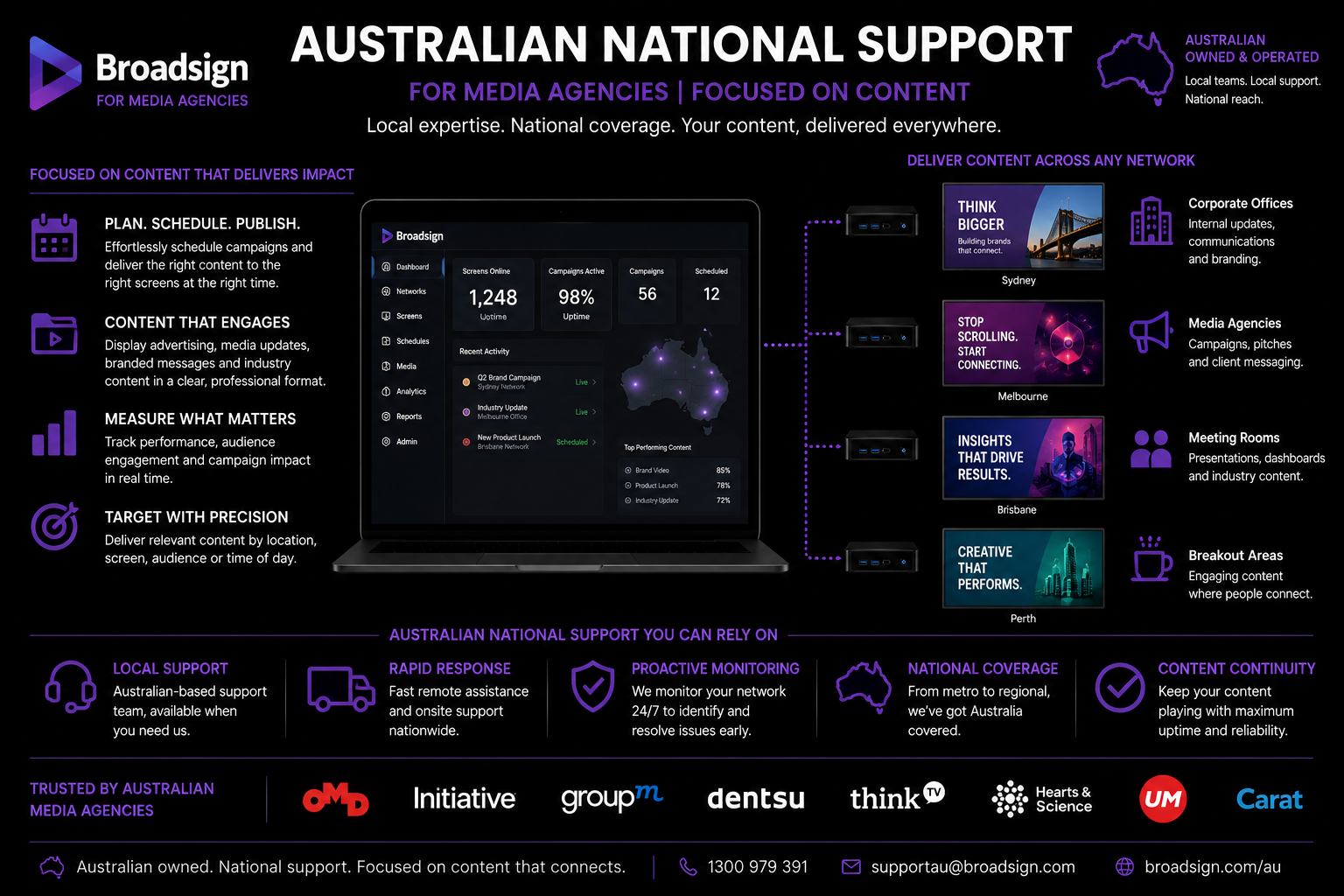
Masters Voice Technology provides ongoing technical support for MediaI's nationally distributed digital signage environment, helping maintain more than 250 premium screens across over 70 media agency locations through remote troubleshooting, Broadsign player support, help desk response, coordinated onsite service and structured reporting.

250+ Premium large-format screens supported across the MediaI network
70+ Media agency locations across the national network
Ongoing Managed technical support, monitoring and field service
NATIONAL DIGITAL SIGNAGE NETWORK

Supporting a network—not simply fixing individual screens.
National Screen Network
MediaI national digital signage screen network across Australian media agency locations
MediaI Australia 70+ Locations · 250+ Screens

MediaI operates a distributed digital signage environment across media agency locations throughout Australia. At this scale, maintaining the network is fundamentally different from responding to an isolated screen fault.

Each location forms part of a broader technology chain connecting scheduled content, Broadsign-configured media players, network connectivity and commercial large-format displays. A problem visible on a screen can therefore originate at several different points within that chain.

Masters Voice Technology supports the environment as a national digital signage network rather than treating every incident as an independent service call.

That distinction is important. Effective support starts by understanding the operating environment, investigating the likely source of a fault and then selecting the appropriate response.

  • Distributed agency locations across Australia
  • Broadsign-connected media players
  • Commercial large-format digital displays
  • Network and connectivity dependencies
  • Remote technical investigation
  • Coordinated onsite field response

Where an issue can be investigated remotely, the support process can begin before a technician is dispatched. Where physical attendance is needed, the incident can be escalated with a clearer understanding of the symptoms and likely fault area.

This gives MediaI a more consistent support pathway across geographically separated locations and provides greater visibility over the ongoing performance of the network.

The objective is not simply to restore one display. It is to help maintain the availability, consistency and operational performance of the broader MediaI screen network.
01
Network thinking changes the support model. Instead of assuming a visible screen fault is a display problem, the support process considers the complete pathway from scheduled content and player operation through connectivity to the final commercial display.
250+ Premium large-format screens operating across the MediaI network.
70+ Media agency locations supported across the distributed national environment.
Remote Technical investigation can begin remotely where system access and visibility allow.
Ongoing Managed technical support extends beyond initial installation or individual repairs.
SERVICE CHALLENGE

A fault at one screen should not become a blind spot across the network.

A single signage display can often be treated as an isolated device. A geographically distributed screen network requires a different operating model: consistent fault logging, remote investigation, clear escalation, onsite response and visibility of recurring issues.

01

Distributed infrastructure

Displays and players operate across many agency locations rather than within a single building, increasing the importance of remote visibility and consistent service procedures.

02

Multiple possible fault points

A playback issue may involve content, a Broadsign player, connectivity, display configuration, power or onsite hardware. The service process must identify where the actual problem sits.

03

Content visibility matters

Screens form part of MediaI's communication channel. Technical interruptions therefore affect the ability to present advertising, media updates and branded communication as intended.

04

Remote-first investigation

Where technology permits, faults should be reviewed remotely before dispatching a technician, reducing unnecessary travel and accelerating diagnosis.

05

Coordinated field response

Issues that cannot be resolved remotely need a clear pathway to onsite technical attendance and practical hardware troubleshooting.

06

Service accountability

Help desk processes, service history, escalation, SLA tracking and reporting provide visibility beyond individual fault tickets.

CONTENT DELIVERY WORKFLOW

From scheduled content to a live screen inside the agency.

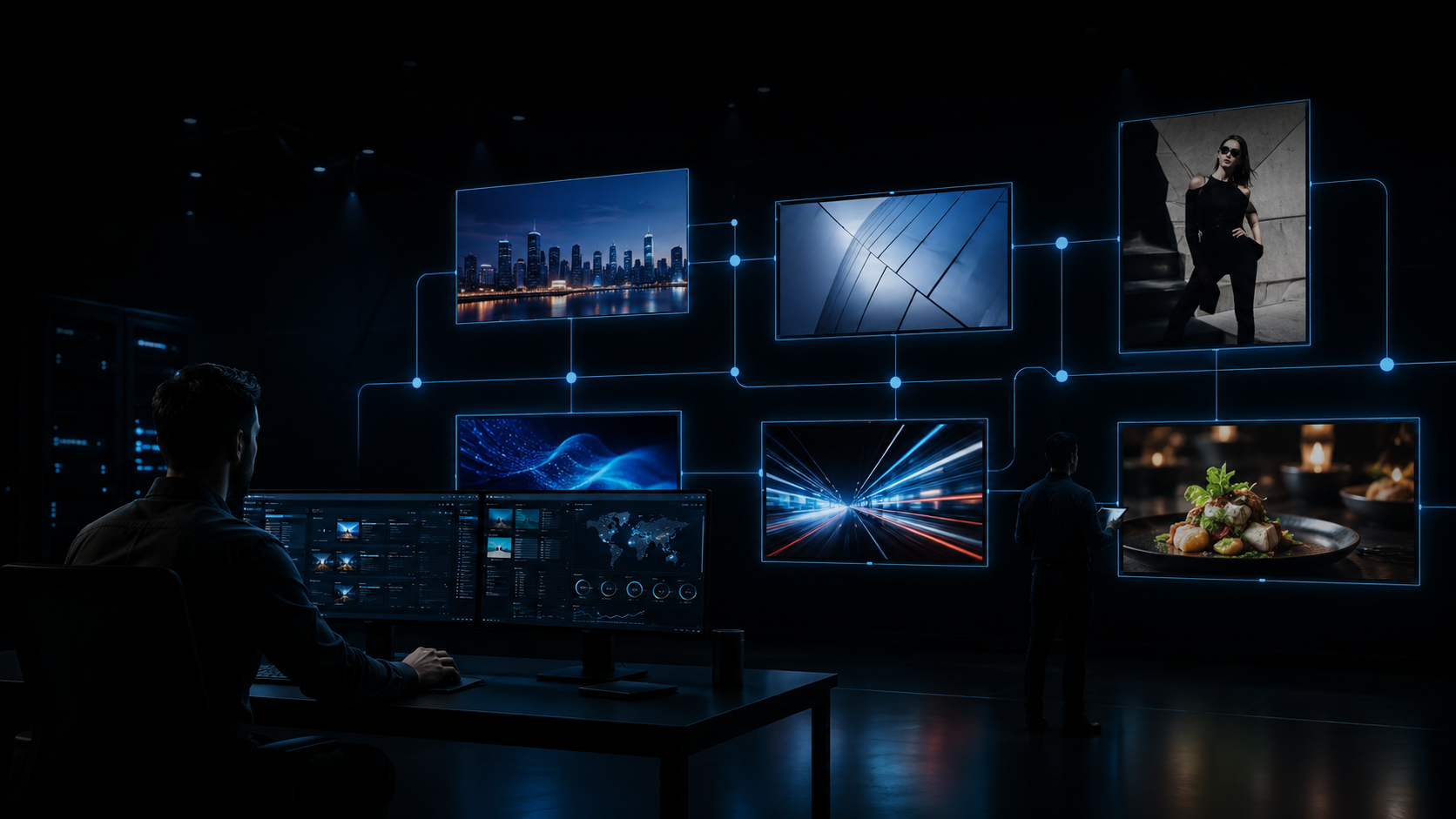
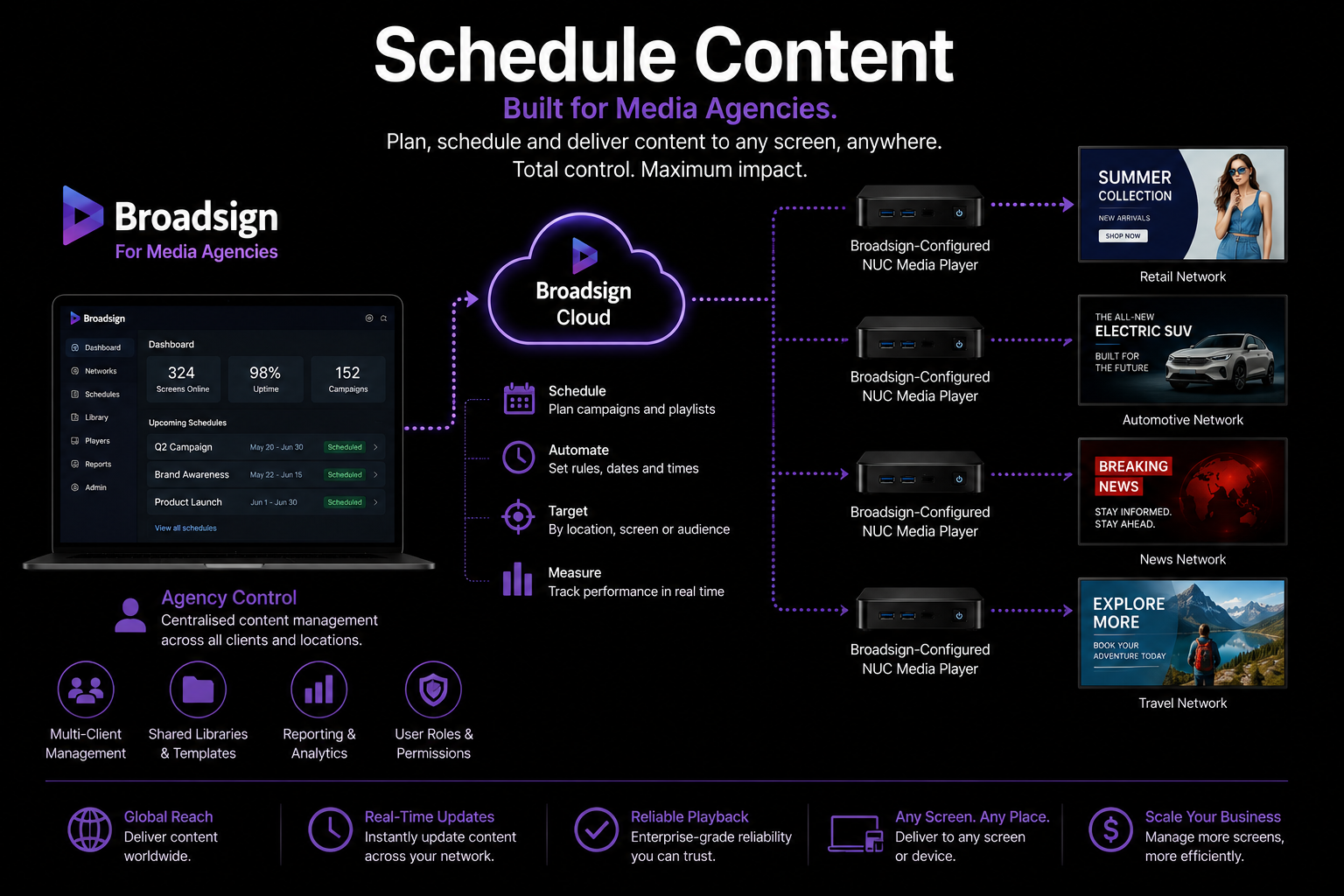
Supporting the network requires an understanding of the full delivery path. Content is scheduled through the signage platform, delivered to configured media players and presented through commercial displays at individual agency locations.

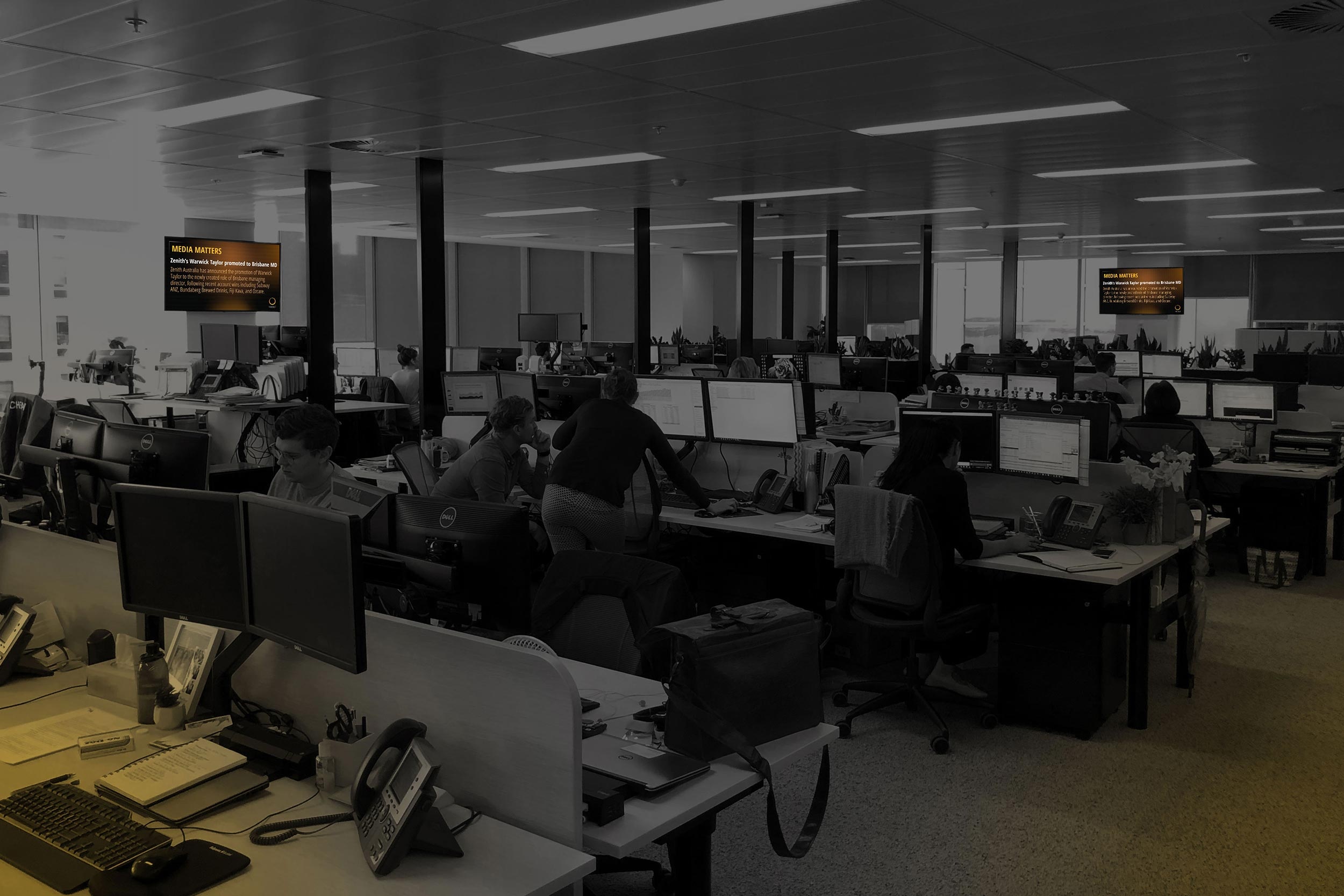
MediaI commercial digital signage screen presenting scheduled content within a media agency
02 · SCREEN PRESENTATION

Commercial display presentation

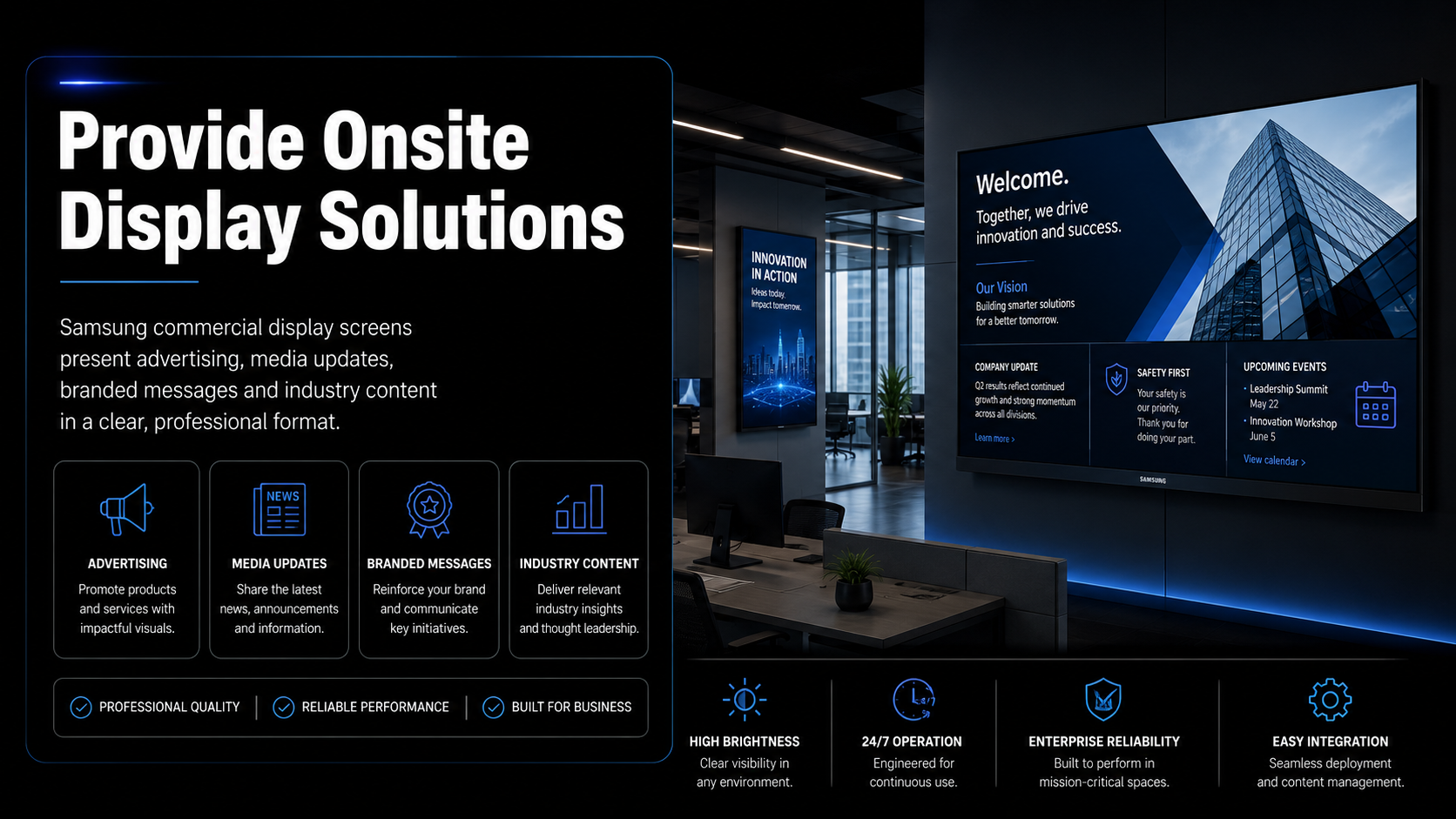
Large-format displays present advertising, industry information, branded messages and media content within the agency environment.

Explore the MediaI screen network ↗
THE SUPPORT MODEL

Remote when possible. Onsite when necessary. Accountable throughout.

01

Monitor

Maintain visibility of connected signage infrastructure and identify issues requiring technical investigation.

02

Diagnose

Review player, connectivity and display symptoms remotely where access and technology allow.

03

Escalate

Move unresolved faults through a defined service pathway rather than treating every issue as an unrelated support request.

04

Attend

Coordinate onsite technical response where the fault requires physical inspection, repair or equipment intervention.

05

Resolve

Manage the incident through testing and restoration rather than stopping at the initial diagnosis.

06

Record

Maintain service history so recurring issues and equipment trends can be identified over time.

07

Report

Use SLA and service reporting to create greater visibility of network support activity.

08

Improve

Use operational history to inform maintenance, replacement and future technology decisions.

REMOTE MONITORING & DIAGNOSTICS

Investigate before automatically dispatching a technician.

Remote Diagnostics
Remote monitoring and diagnostics for the MediaI national digital signage network

Supporting a distributed digital signage network starts with understanding where a fault is occurring before automatically sending someone to site.

A screen may appear offline even though the display itself is operating correctly. The problem may sit further upstream in the media player, network connection, content path, configuration or source environment.

Remote investigation gives Masters Voice Technology an important first diagnostic layer across the MediaI network. Where remote access and system visibility allow, the support team can investigate symptoms, narrow down the likely cause and determine the most appropriate next step.

This creates a more efficient support model for a geographically distributed signage environment. Issues that can be resolved remotely can be addressed without unnecessary travel, while faults requiring physical intervention can be escalated with more information already available to the attending technician.

  • Media player status and playback investigation
  • Connectivity and communications checks
  • Content delivery pathway investigation
  • Display and source-path troubleshooting
  • Configuration and remote support
  • Escalation to onsite service when required

Rather than treating every reported screen issue as an isolated hardware fault, the support process looks at the complete digital signage technology chain between scheduled content and the display visible inside the agency.

01 · REPORT Issue identified A signage, playback or display issue enters the managed support process.
02 · INVESTIGATE Remote diagnostics Player status, connectivity and the content pathway can be reviewed where access permits.
03 · RESOLVE Remote resolution Suitable software, configuration or operational issues may be resolved without a site visit.
04 · ESCALATE Onsite response Physical faults can be escalated into a coordinated field-service response.
NATIONAL SUPPORT PATHWAY

One pathway from reported issue to resolution.

Managed Support
MediaI digital signage monitoring and managed support service

A national digital signage network needs more than individual repairs. It needs a consistent pathway for incidents to move from detection through investigation, escalation and resolution.

Masters Voice Technology provides MediaI with an ongoing technical support structure connecting help desk response, remote diagnostics, field service and service reporting.

This is particularly important for a network operating across many geographically separated agency locations. The support model creates a central technical pathway rather than requiring each location to independently determine how a signage issue should be addressed.

When remote investigation indicates that physical attendance is required, the information already gathered during the diagnostic process can support a more targeted onsite response.

The service history also creates greater visibility around recurring issues, equipment behaviour and patterns that may warrant further technical investigation.

The result is a support model designed around the ongoing operation of the network, rather than treating maintenance as a collection of unrelated service calls.

Remote First Investigate suitable faults before automatically dispatching technicians across the network.
Coordinated Field Service Escalate faults requiring physical intervention into a structured onsite response.
Service Visibility Maintain a clearer history of incidents, attendance, resolution and recurring issues.
SERVICE RESPONSIBILITY

Support across the technology layers that keep content visible.

PLATFORM

Broadsign player support

Assistance with configured media players, playback behaviour, connectivity and related technical investigation.

DISPLAY

Commercial screen support

Troubleshooting display operation, source connectivity and site-level screen issues.

NETWORK

Connectivity investigation

Review network dependencies and connectivity symptoms affecting the signage delivery path.

REMOTE

Remote troubleshooting

Investigate suitable incidents without immediately requiring physical attendance at the agency site.

FIELD SERVICE

Coordinated onsite support

Arrange physical technical attendance where remote investigation cannot restore normal operation.

GOVERNANCE

SLA and service reporting

Track service activity to create greater visibility of response, recurring faults and network support.

SERVICE OUTCOME

A national signage environment with a defined technical support structure.

MediaI can concentrate on the communication and content delivered through its network while the technical operating environment has an established pathway for monitoring, troubleshooting, onsite response and ongoing service management.

VISIBILITY

Greater network awareness

Support is managed across a distributed technology environment rather than only when individual equipment failures are reported.

RESPONSE

Remote-first diagnosis

Suitable incidents can be investigated remotely before deciding whether onsite technical attendance is required.

CONSISTENCY

One support pathway

Help desk, escalation and service processes provide a more consistent approach across multiple locations.

LIFECYCLE

Support beyond installation

The relationship demonstrates an ongoing operating model rather than a project that ends at handover.

WHY THIS PROJECT MATTERS

The larger a screen network becomes, the more important the operating model becomes.

Digital signage software, commercial displays and media players are only part of a successful multi-location network. Someone also needs to own the technical response when the complete chain does not operate as expected.

The MediaI engagement demonstrates how a structured support relationship can connect remote troubleshooting, field service, hardware knowledge and service reporting around a nationally distributed signage estate.

For comparison, organisations still selecting their signage platform can review our dedicated CMS buyer's guide rather than using this case study as a generic platform comparison.

PROJECT QUESTIONS

MediaI national signage service FAQs.

How large is the MediaI screen network?

MediaI describes its network as more than 250 premium large-format screens across more than 70 media agency locations nationally.

What does Masters Voice Technology support?

The service covers Broadsign media-player support, commercial display assistance, connectivity investigation, remote troubleshooting, help desk response, onsite service and structured reporting.

Why is remote troubleshooting useful for a national network?

Remote investigation can identify suitable player, configuration or connectivity issues before physical attendance is arranged, helping the support team select the appropriate next action.

What happens when a problem cannot be fixed remotely?

The fault can move through the service escalation process to coordinated onsite attendance where physical inspection or equipment intervention is required.

What role does Broadsign play?

Broadsign provides the digital-signage platform environment used to schedule and deliver content through configured players to the MediaI screens.

Can Masters Voice support other multi-location screen networks?

Suitable multi-location environments can be assessed around their CMS, media players, commercial displays, connectivity, remote-access capability, geographic coverage and required service levels.

MULTI-SITE TECHNOLOGY

Managing screens across multiple locations?

Masters Voice Technology can assess the displays, media players, CMS, network dependencies, support requirements and service model needed to manage a distributed technology environment.