
01
Dedicated source cables
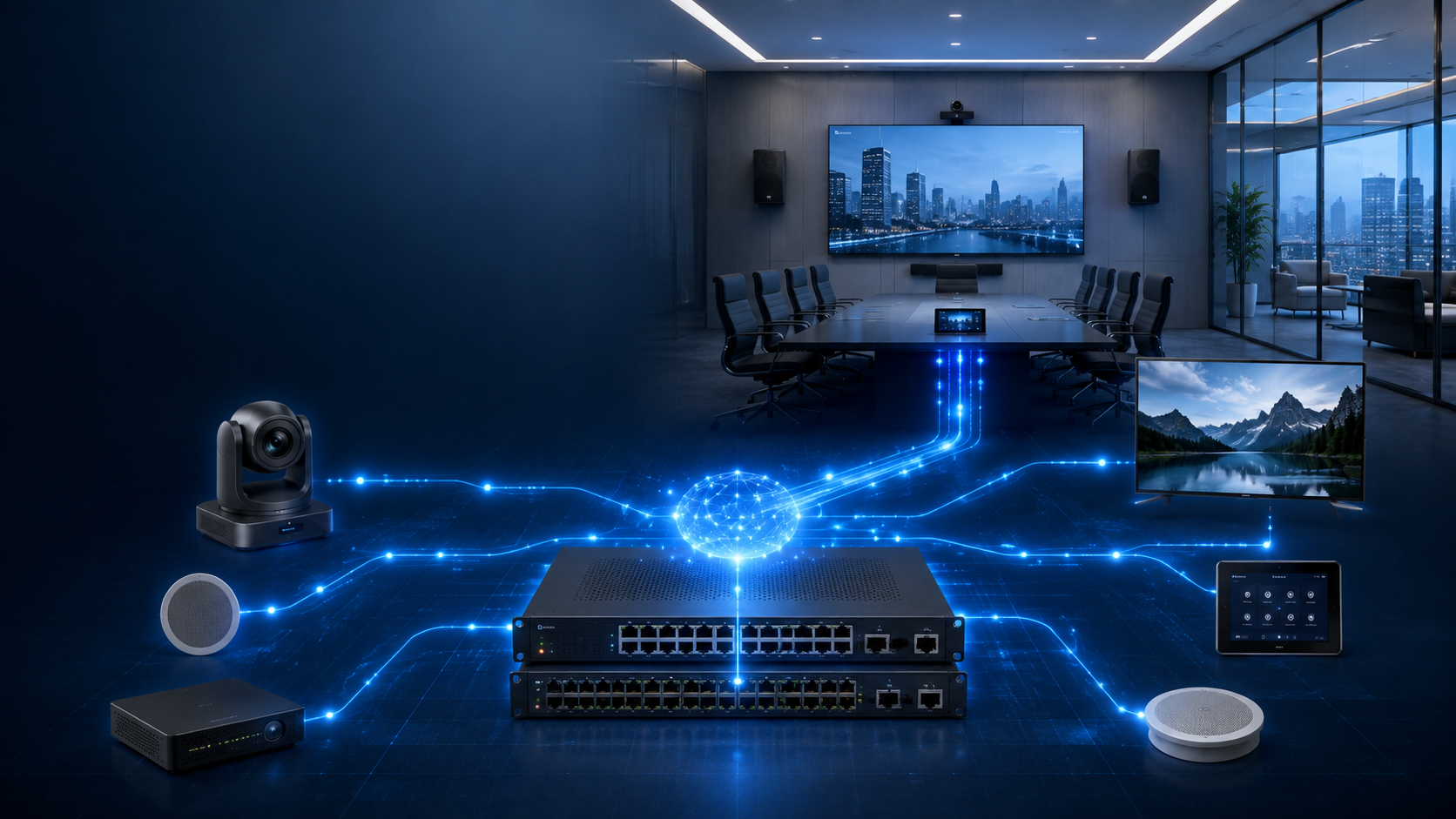
HDMI, SDI, analogue or extension cabling carries each source toward the central switcher or directly to a display.

AV over IP Systems Sydney
Traditional AV systems connect individual sources, switchers and displays through fixed cable paths. AV over IP replaces much of that physical routing with a flexible network architecture that can distribute content across rooms, buildings and campuses.
High-Value Applications
The business case becomes stronger as the number of endpoints, buildings, content sources and routing combinations increases.
Route presentation, town-hall, signage and broadcast content across meeting rooms, training spaces, reception and staff areas.
Share learning, event, lecture and signage content between classrooms, halls, campuses and central production facilities.
Distribute secure conferencing, operational information, hearing-room content and control-room video between authorised destinations.
Route live sport, digital signage, venue promotions and function-room sources to commercial displays across multiple zones.
Deliver operational sources to operator displays, overview walls, monitoring positions and recording systems.
Distribute central sources, emergency content and live information to selected screens or screen groups.
AV over IP in Practice
Venue AV over IP
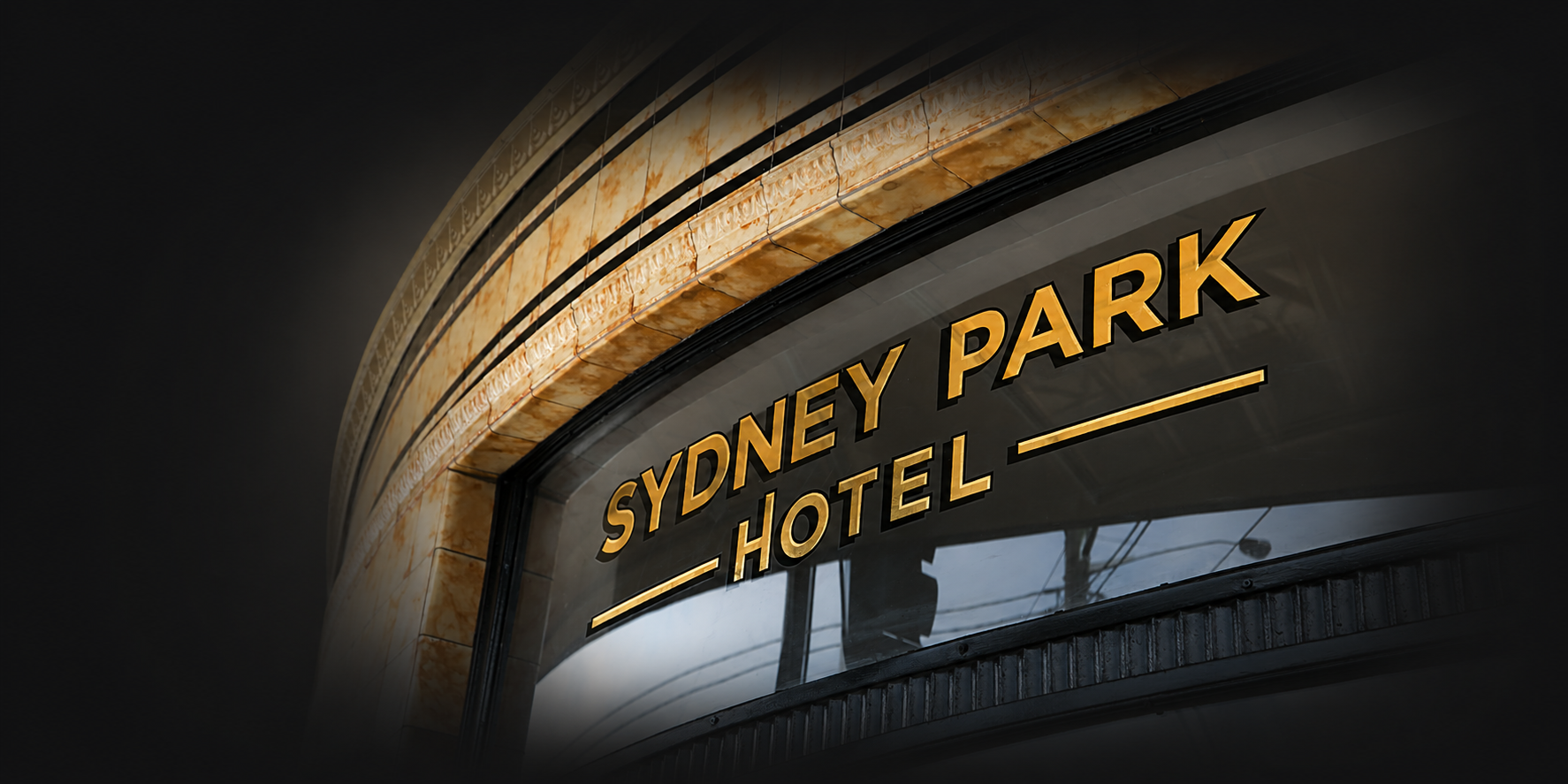
Masters Voice Technology and ACCAV delivered a multi-level AV upgrade for Sydney Park Hotel incorporating commercial displays, zoned audio, rooftop AV, function-room technology and AV-over-IP video distribution.
Turtle AV Darwin HD encoders, decoders and control hardware allow authorised sources to be routed to selected LG commercial displays across the venue.
Staff can show different content in different areas, supporting live sport, venue entertainment, digital signage, news, functions and local presentation sources without requiring a dedicated source cable to every screen.
Design Before Procurement
Begin with routing, quality and operational requirements. Product selection should follow the system design rather than determine it.
Document computers, television services, media players, cameras, signage systems, production feeds and presentation inputs.
Record displays, projectors, video walls, recording systems, production systems and monitoring positions.
Confirm which sources need to reach which destinations and whether simultaneous routes are required.
Define resolution, frame rate, colour requirements, scaling, protected content and acceptable visual compression.
Determine whether the application is passive viewing, interactive presentation, live performance, production or control-room monitoring.
Review cabling, switches, port speeds, uplinks, PoE, multicast, segmentation, security and available rack infrastructure.
Decide how staff select sources, screens, groups, presets and emergency content without accessing technical configuration.
Allow for additional endpoints, higher resolutions, new buildings, more source types and changing operating workflows.
Agree on monitoring, configuration backups, firmware, network changes, warranty support and onsite fault response.
Selecting the right delivery partner is also important because AV over IP sits between professional AV and enterprise networking. Review How to Choose a Commercial AV Integrator before comparing project proposals.
Build for Flexibility and Growth
Point-to-point systems create routes through dedicated signal cables and fixed switching hardware. AV over IP creates routes through managed endpoints, Ethernet switching and software control.
Masters Voice Technology designs, installs and supports commercial AV-over-IP systems across Sydney and NSW using SDVoE, Dante AV, NDI, IPMX and compatible control platforms.
Our team can assess your existing cabling and network, define the required routing architecture and coordinate AV endpoints, switches, control, electrical services and structured communications cabling.
Contact Our Team
Tell us about your organisation, site, existing technology and project requirements. Our team can assist with commercial audio visual design, installation, electrical and communications works, system upgrades, maintenance and managed support.
Project Enquiry
Use our project enquiry form to share your requirements and optional supporting files.
Prefer to speak with us? Call 1300 804 320 or email our team.