NCAT Hearing Room AV Installation Sydney | Four Hearing Rooms

NSW Department of Communities & Justice — Courtroom AV Integration

Read Case Study
arrow up rightarrow up right

NSW Department of Communities & Justice

Project Category
Government AV

Masters Voice Technology delivered four NCAT hearing-room AV systems at Civic Tower, including Q-SYS audio, Cisco conferencing, cameras, microphones, displays and hearing assistance.

Digital signage managed service

Creating Consistent, Reliable AV Across Multiple Hearing Rooms

NCAT hearings may involve tribunal members, applicants, respondents, legal representatives, witnesses and remote participants. Every person must be able to hear, be heard and view relevant content clearly.

The four rooms required a standardised AV solution that could:

  • Support reliable video conferencing and remote attendance
  • Capture clear speech from multiple hearing-room positions
  • Display remote participants and presented evidence
  • Provide controllable audio throughout each room
  • Support recording and digital audio workflows
  • Provide infrared hearing assistance for users with hearing impairment
  • Integrate with secure DCJ network and communications infrastructure
  • Meet detailed government cabling, testing and documentation standards

The installation also needed to be coordinated within a new construction environment and completed within a restricted project window.

How the Hearing-Room System Works

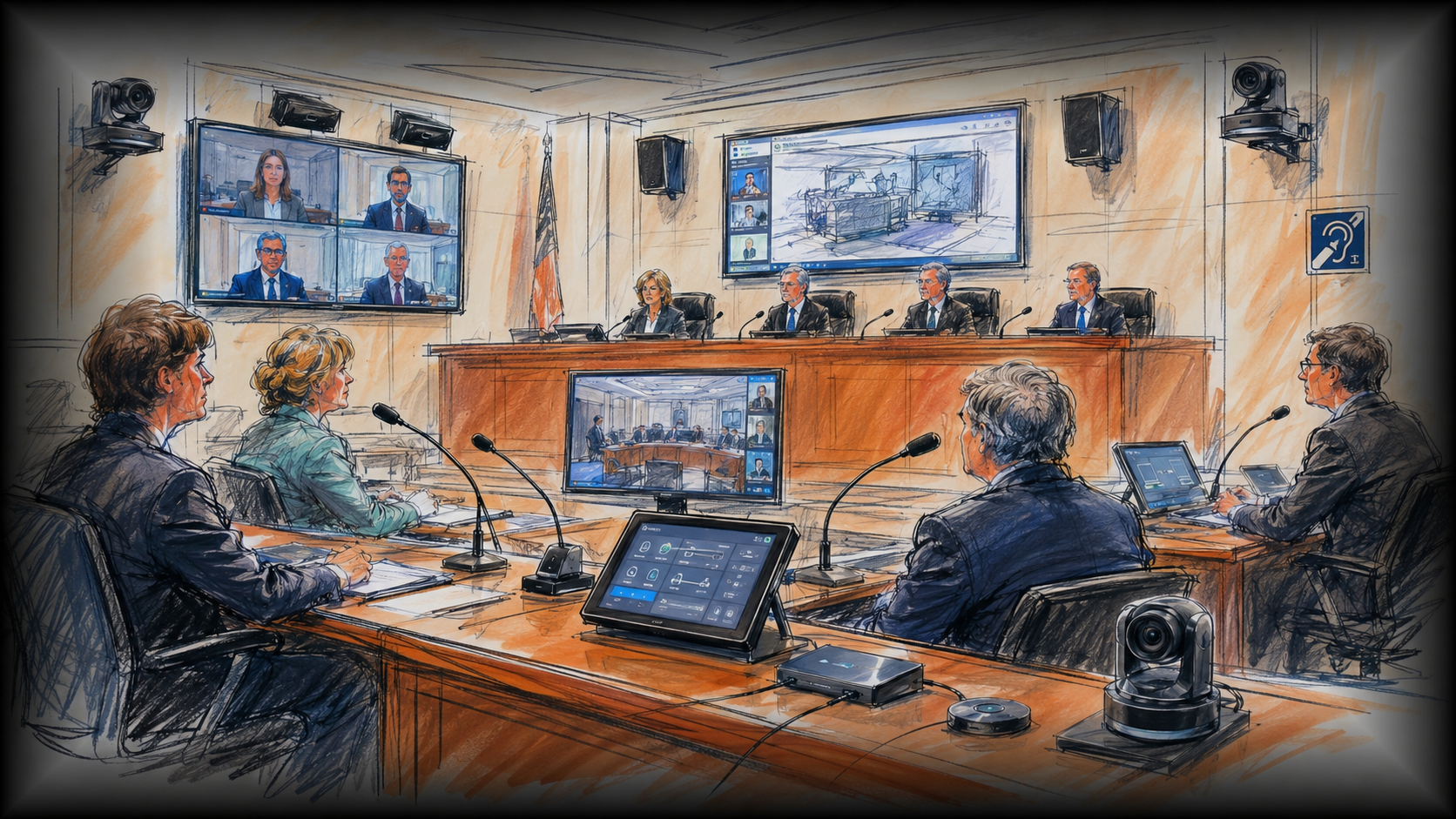
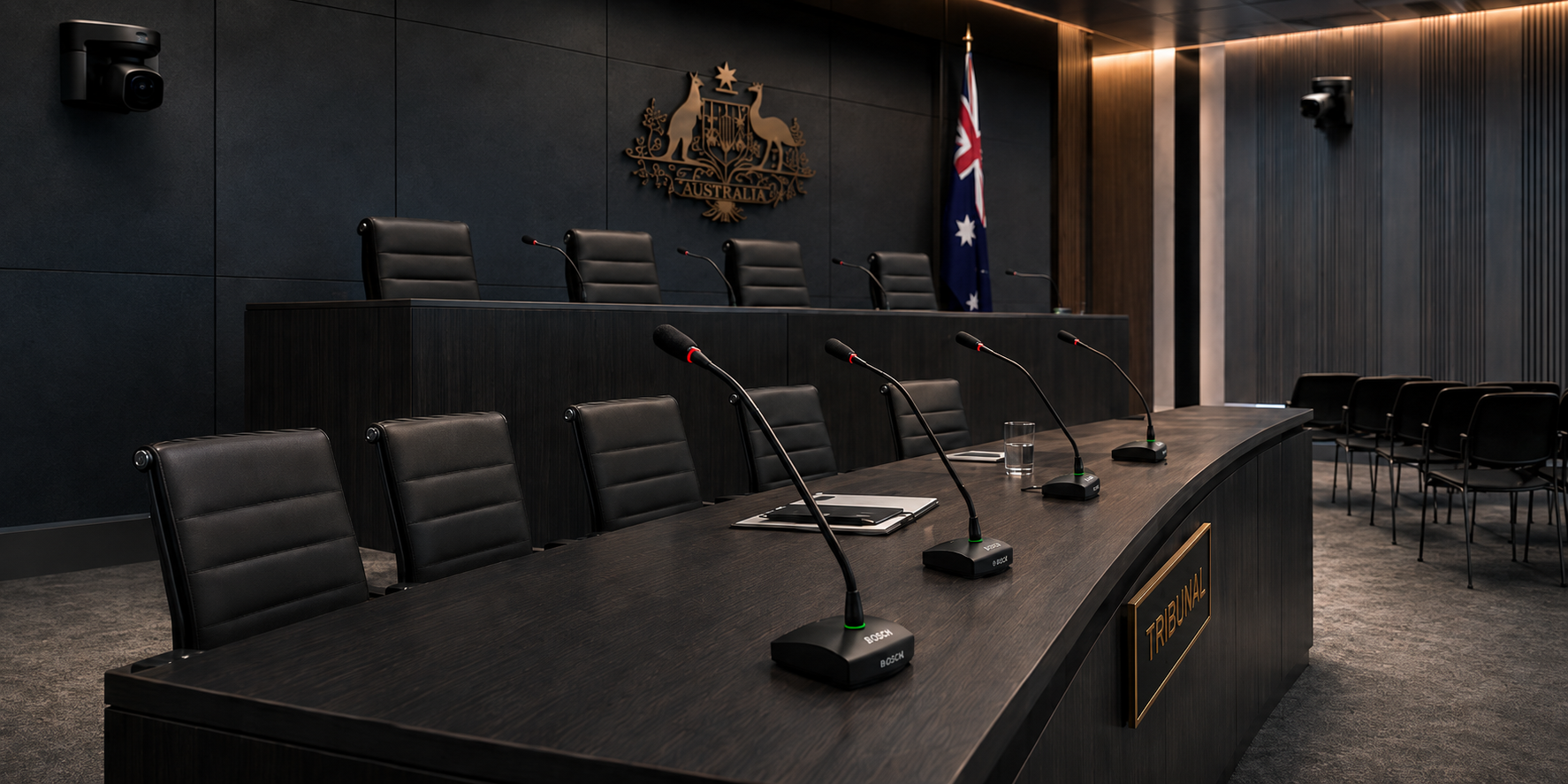
The hearing-room workflow connects room participants, remote attendees, presentation sources, recording systems and accessible listening equipment through one integrated AV environment. Masters Voice Technology delivered four purpose-built audio visual hearing rooms for the NSW Civil and Administrative Tribunal at Civic Tower, 66 Goulburn Street, Sydney. The project included four Hearing Rooms each designed to support clear communication, remote participation, evidence presentation, audio capture and accessible hearing assistance. The completed installation brings video conferencing, microphones, displays, cameras, audio processing, system control and structured cabling together within a consistent hearing-room environment

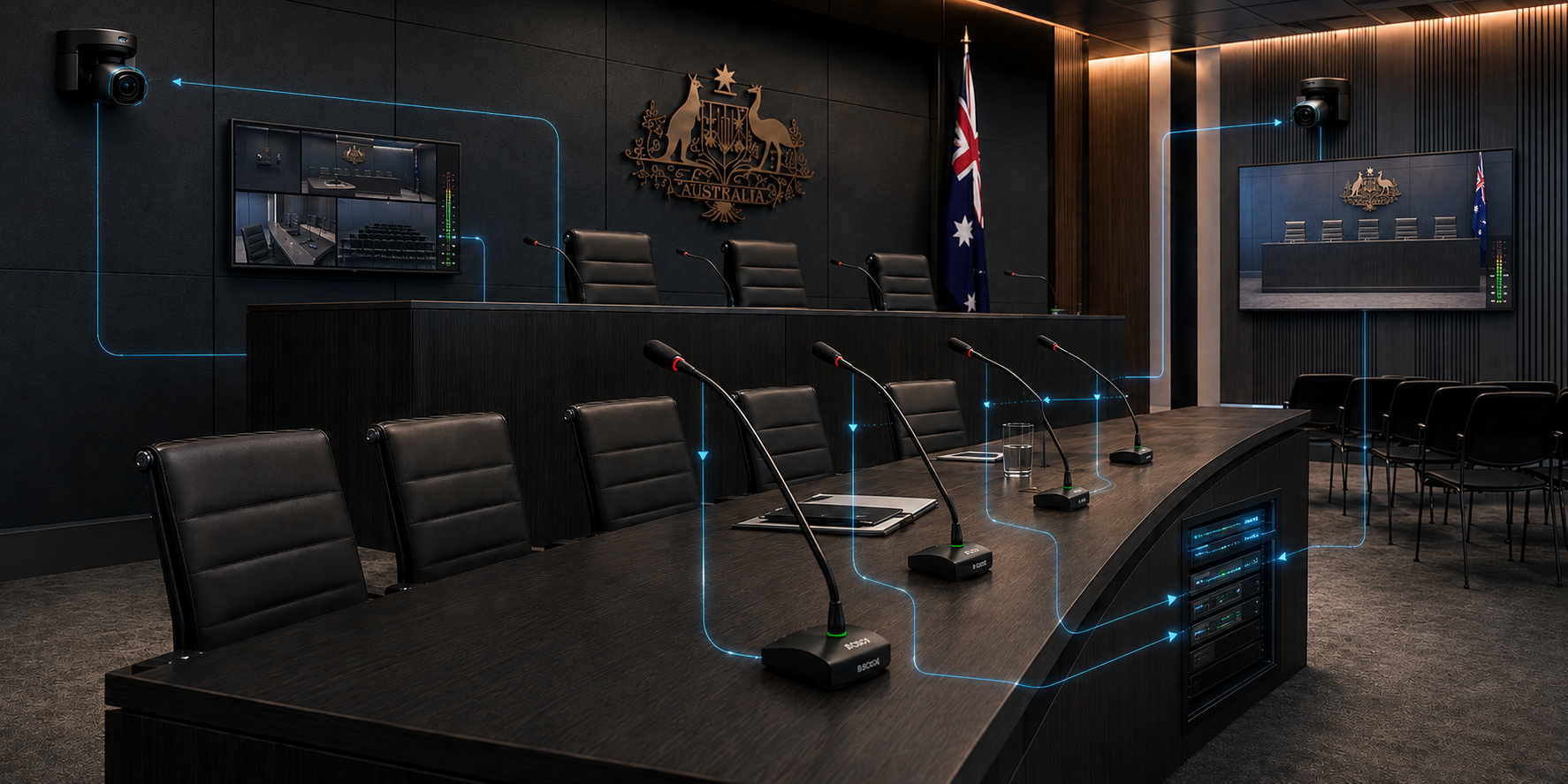
Step 1 — Capture the Hearing

Audix gooseneck microphones, supplementary room microphones and hearing-room cameras capture speech and video from tribunal members, participants and witnesses.

Media Player Delivery
Digital Signage Screen Presentation
Step 2 — Process and Route Audio and Video

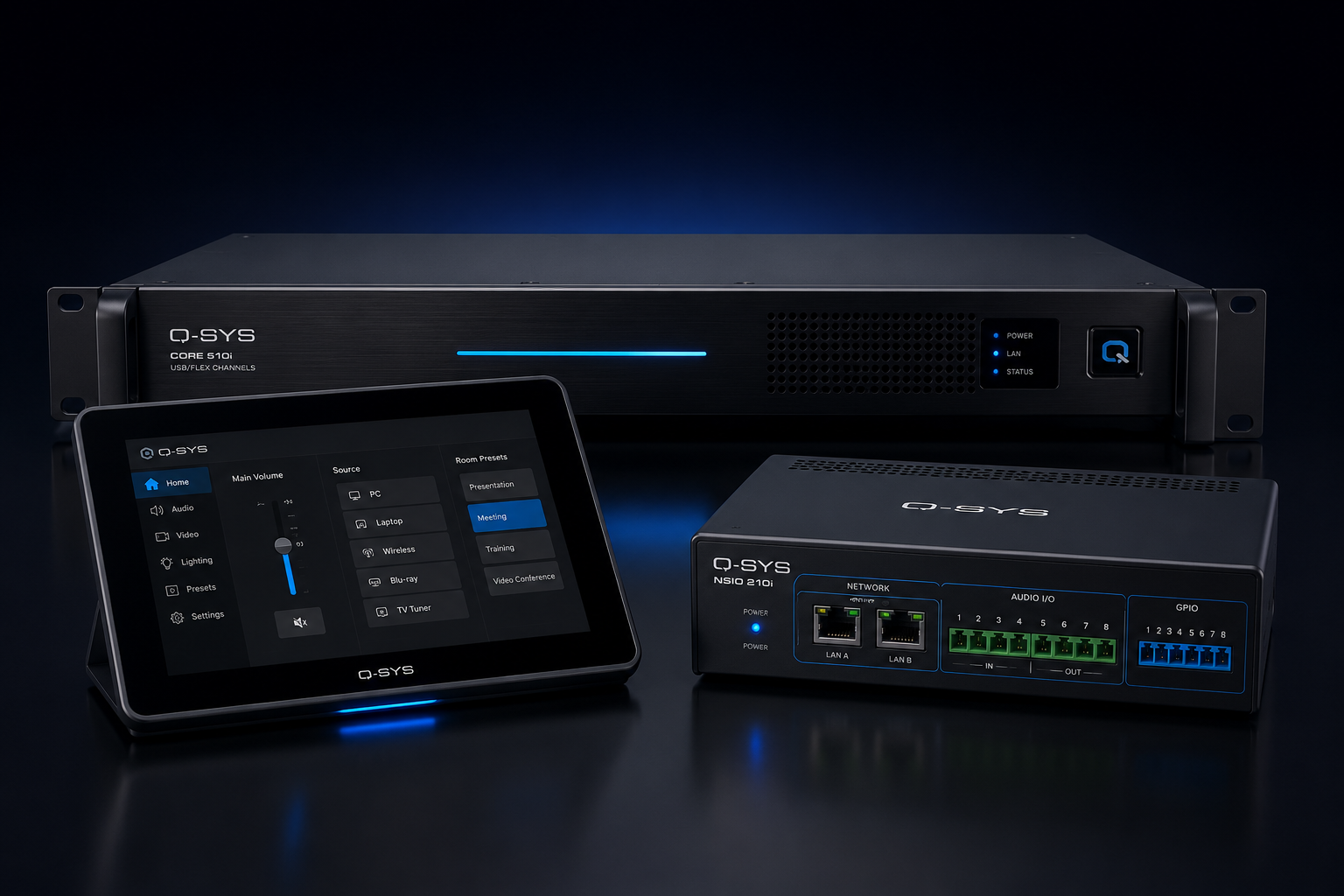
Q-SYS processing, Dante networked audio and the hearing-room video infrastructure manage microphone signals, loudspeaker audio, camera feeds and presentation sources.

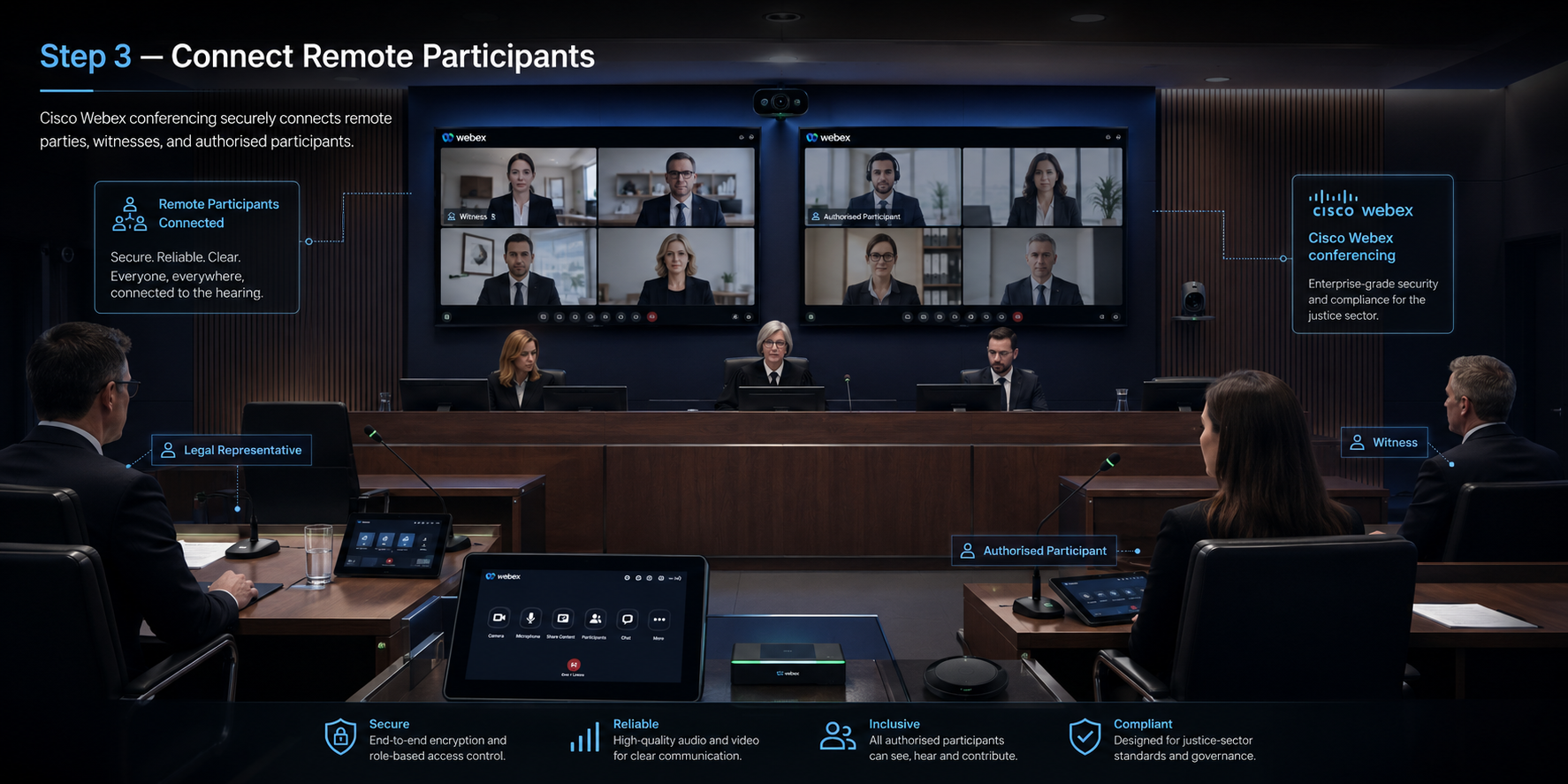
Step 3 — Connect Remote Participants

Cisco Webex conferencing technology allows remote parties, witnesses and other authorised participants to join the hearing and communicate with the room.

Commercial display remote monitoring
MediaI digital signage support desk
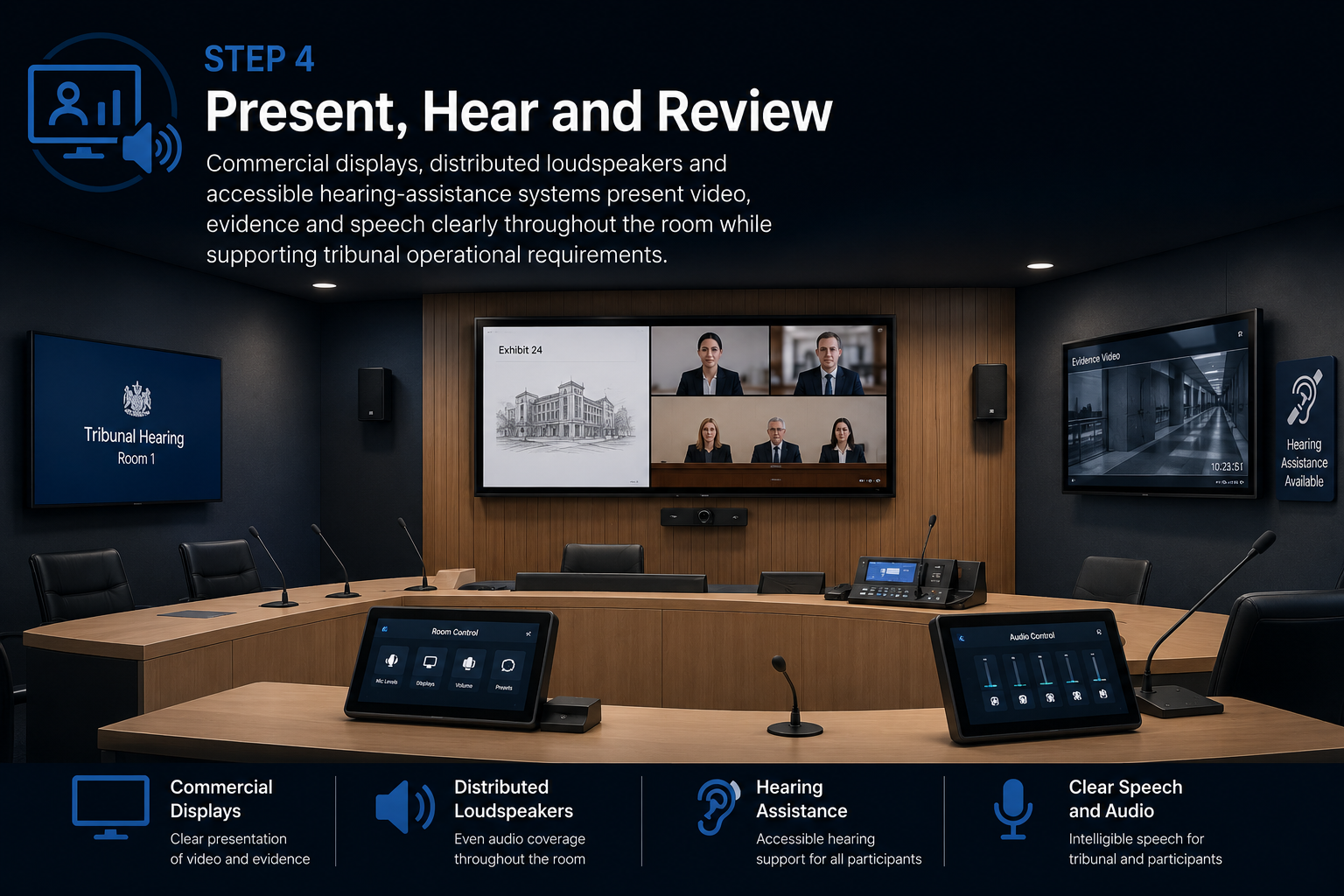
Step 4 — Present, Hear and Review

Commercial displays, distributed loudspeakers and accessible hearing-assistance systems present video, evidence and speech clearly throughout the room while supporting tribunal operational requirements.

The Solution

Masters Voice Technology installed and integrated a consistent AV platform across all four hearing rooms.

Each room was equipped with microphones positioned for tribunal and participant use, hearing-room cameras, commercial displays, networked audio processing, loudspeakers, conferencing equipment and control infrastructure.

A central Q-SYS platform provided digital signal processing and audio routing, supported by Dante networking and Q-SYS input and output interfaces. The design allowed multiple microphone inputs and room audio signals to be managed reliably while maintaining clear speech throughout each hearing space.

Cisco Webex Codec Pro systems and touch controls supported remote participation, while Minrray camera infrastructure provided video capture from the hearing rooms.

The installation also included internal rack construction, custom connection plates, structured cabling, power-control hardware and integration with client-supplied network and computing equipment.

The Technology behind the Hearing-Room Solution

Purpose-built hearing-room technology must allow every participant to see, hear and communicate clearly, whether they are physically present or joining through an Audio Visual Link.

The NCAT solution combines professional audio processing, multi-camera video capture, commercial displays, evidence presentation, conferencing, recording, accessible listening and centralised equipment management.

Q-SYS Audio Processing and Control

A Q-SYS Core 24f processor provides the central digital signal processing platform for the hearing-room audio system. Q-SYS input and output interfaces connect the room microphones, conferencing audio, recording equipment, speakers and other audio sources. Audix gooseneck microphones provide dedicated speech capture at key participant positions, while a directional Rode microphone supports additional room capture requirements. Q-SYS ceiling speakers and Powersoft Dante amplification distribute clear audio throughout the room. The system is designed to manage multiple microphones and audio destinations while maintaining clear, controlled sound for both local and remote participants.

Logitech Rally Bar and Rally Bar Mini
Q-SYS DSP, Control and Room-Combine Automation
Hearing Room Microphones

Minrray PTZ cameras provide multiple viewing angles across each hearing room, allowing participants and relevant room positions to be captured for Audio Visual Link sessions. Samsung 75-inch commercial displays present remote participants, evidence and other hearing information clearly within the room. Dell touch-enabled monitors provide additional local viewing and interaction at nominated positions. The combination of multiple cameras and displays allows the room to support different hearing layouts while maintaining clear visual communication.

Evidence Presentation and Video Routing

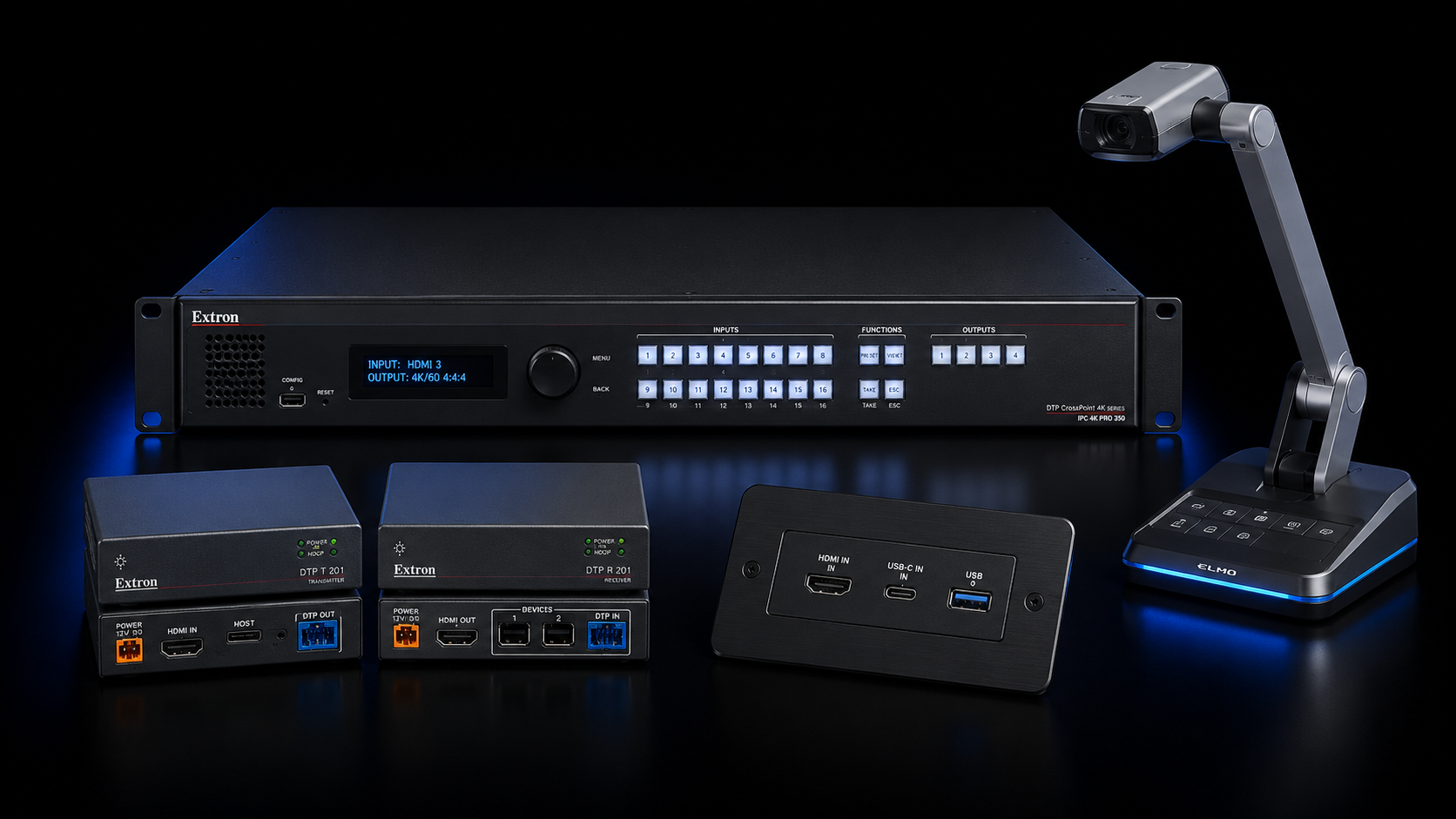
Extron switching, scaling and DTP signal-extension equipment manages the distribution of video sources throughout the hearing room. Integrated presentation points allow authorised users to connect compatible devices, while an Elmo visual presenter supports the display of printed documents and physical evidence. Secure adaptor sets provide practical connectivity for HDMI, USB-C and Mini DisplayPort devices. Blackmagic SDI routing and conversion equipment supports professional video distribution between cameras, displays, conferencing and recording systems.

Q-SYS touch panel controlling divisible training rooms
Audio-Technica ceiling microphone and Q-SYS ceiling speakers
Audio Visual Link, Recording and Control

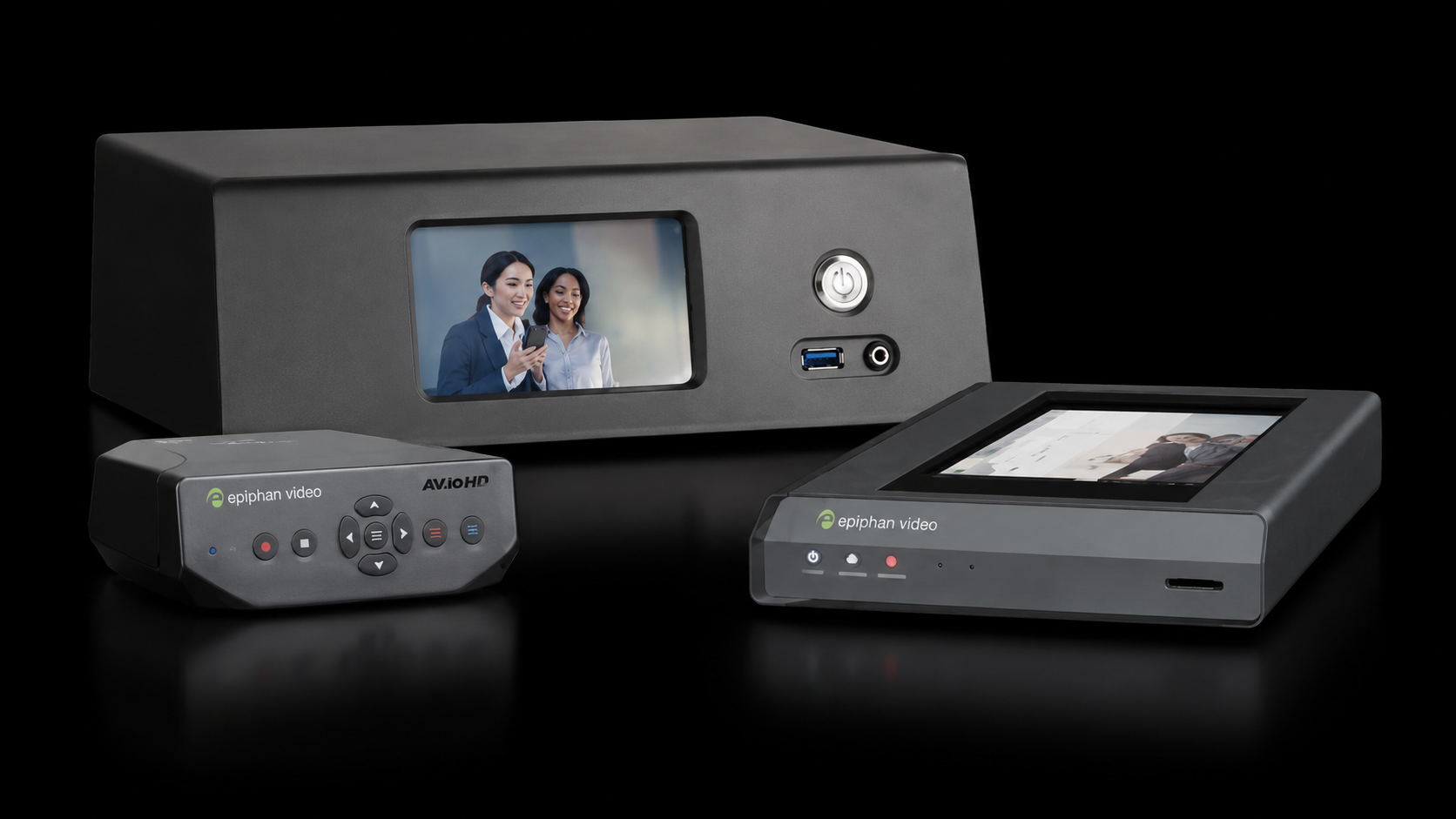
Cisco Webex Codec Pro equipment provides the conferencing platform for Audio Visual Link communication, supported by professional room cameras, microphones, speakers and displays. An Epiphan Pearl recording system captures hearing-room audio and video where recording is required. Blackmagic matrix switching routes the appropriate video signals to the recording and display destinations. Crestron control hardware, Extron networked power control and managed rack equipment support consistent room operation and system management. APC power protection helps maintain reliable operation of critical rack-mounted technology.

The Results

The completed AV solution provides NCAT with four consistently equipped hearing rooms designed to support in-person proceedings, remote participation, evidence presentation, accessible listening and recording.

By integrating the room technology into a coordinated system, staff can focus on the hearing rather than managing separate audio, video and presentation devices.

Clear Outcomes

  • Four hearing rooms delivered to a consistent AV standard
  • Clear microphone capture for hearing-room participants
  • Multiple PTZ camera views for local and remote proceedings
  • Commercial displays for participants, evidence and hearing content
  • Integrated Audio Visual Link and video conferencing capability
  • Practical document and evidence presentation
  • Infrared hearing assistance for improved accessibility
  • Professional audio and video recording capability
  • Tested structured cabling, SDI signals and speaker systems
  • Complete asset, cable and as-built handover documentation

The result is a professional hearing-room environment that supports clear communication, accessible participation and reliable operation across both local and remote proceedings.

Why This Project Matters

Tribunal hearing rooms depend on clear communication. Participants need to hear proceedings, see relevant people and information, present evidence and join remotely without unnecessary technical interruptions.

This project demonstrates how professional audio visual integration can connect cameras, microphones, displays, conferencing, recording and hearing assistance into one coordinated hearing-room workflow.

By applying a consistent design across four rooms, NCAT gained a more predictable technology environment for staff, tribunal members, legal representatives, witnesses and other participants.

Discuss a similar project