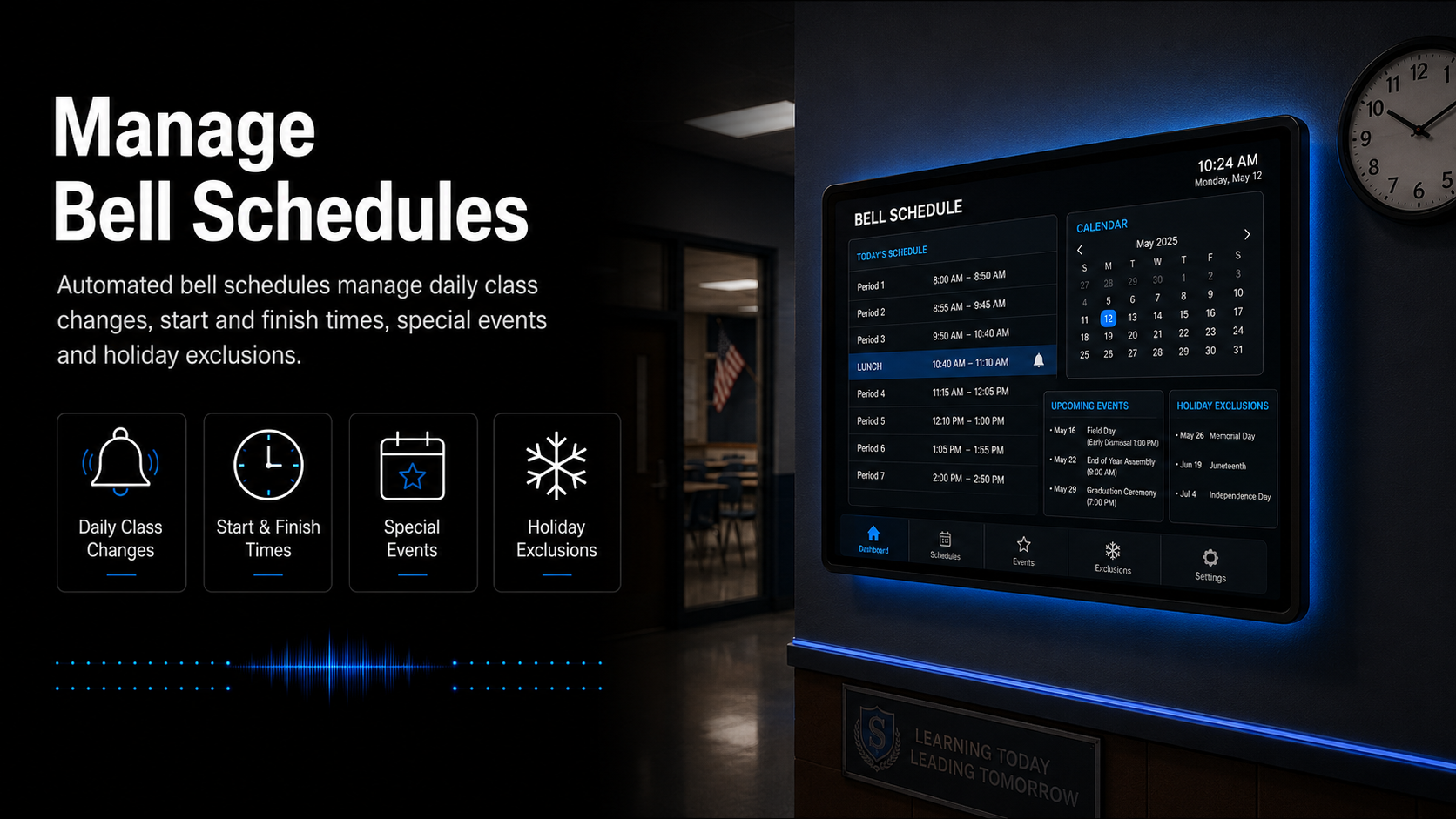
Manage Bell Schedules
Authorised administration staff can manage normal daily schedules, lesson changes, special events, timetable exceptions and holiday periods through a structured control interface.
Masters Voice Technology redeveloped Leichhardt Public School's campus communication system around Q-SYS processing and control, automated bell scheduling, targeted paging, Dante networked audio and priority communication.
Leichhardt Public School required more than a repair to an ageing bell timer. The existing PA infrastructure could no longer provide dependable school-wide communication for scheduled bells, daily paging and urgent announcements.
The redevelopment needed to restore clear audio across classrooms, corridors, administration spaces and outdoor areas while making normal operation straightforward for administration staff.
It also required a technical platform capable of bringing bell schedules, paging zones, audio routing and priority functions together while allowing the system to grow as campus requirements changed.

The system brings school bell scheduling, selected-zone paging, priority communication and distributed audio into one coordinated operating workflow.
Authorised administration staff can manage normal daily schedules, lesson changes, special events, timetable exceptions and holiday periods through a structured control interface.
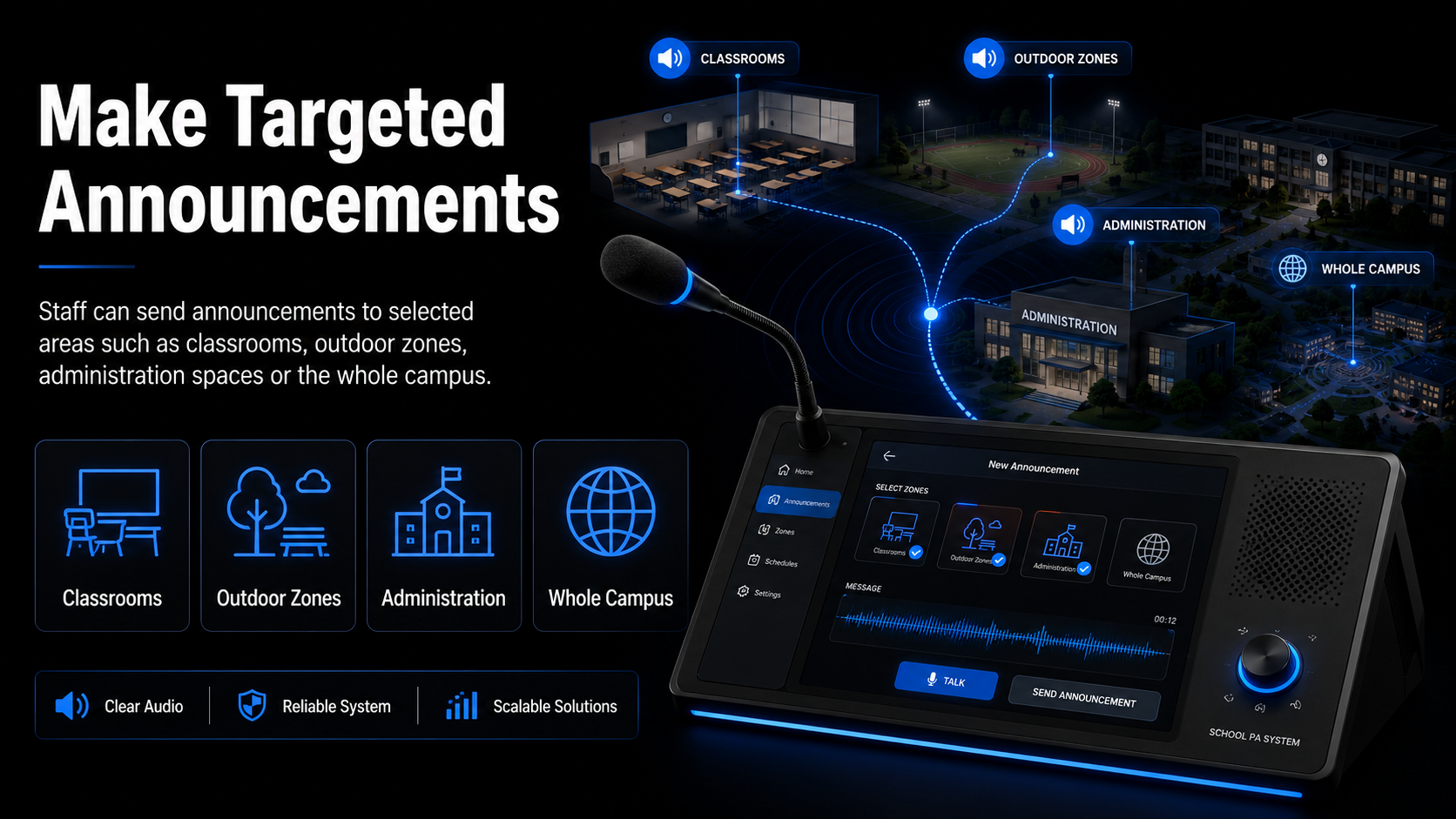
Staff can direct live or recorded announcements toward nominated buildings, selected paging zones or the complete school rather than broadcasting every routine message everywhere.
Programmed priority logic allows approved urgent communication to take precedence over routine bells, music and normal paging according to the school's configured communication workflow.
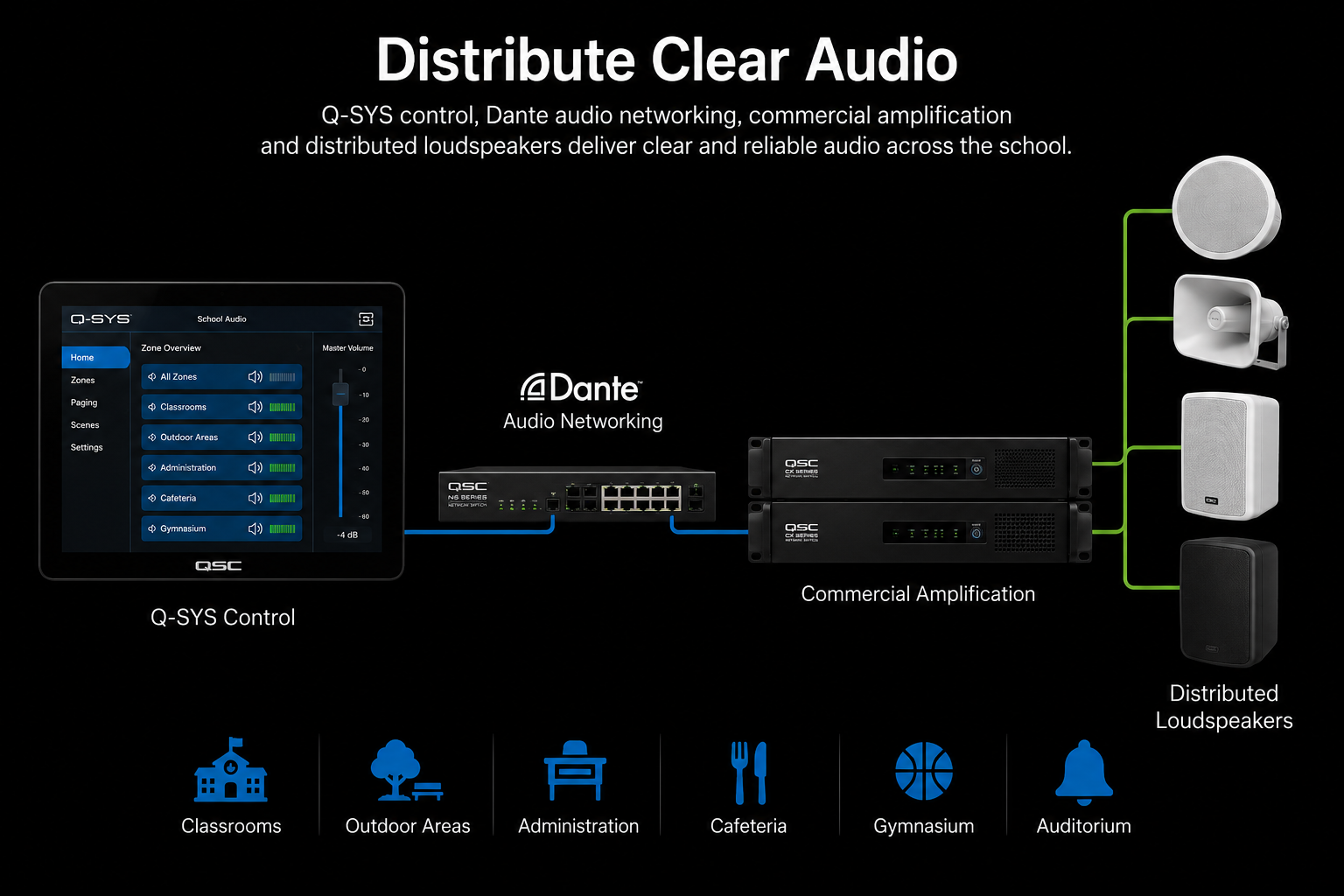
Dante networked audio, commercial amplification and appropriately distributed loudspeakers provide consistent communication across classrooms, corridors, administration and required outdoor areas.
Rather than replacing individual failed components with another collection of isolated devices, the redevelopment centred the system around an integrated audio and control architecture.
Q-SYS provides the central processing and control environment for bell scheduling, paging, audio routing, priority behaviour and staff control functions.
Explore Q-SYS integration →
Dante provides digital audio transport between system components, creating flexible routing and a more scalable alternative to relying solely on long analogue audio pathways.
Explore Dante audio networking →
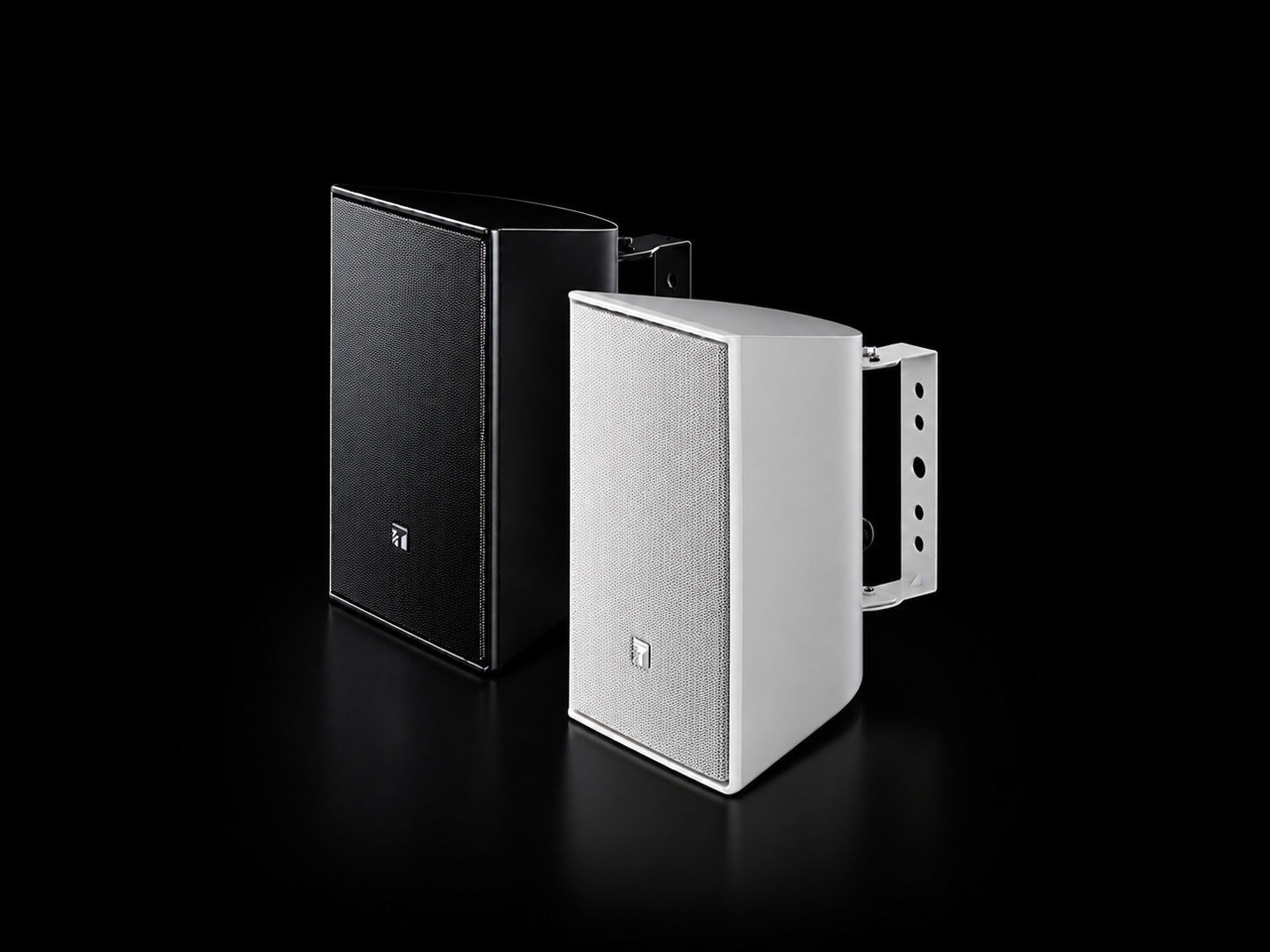
Dante-capable Lab Gruppen amplification supports the distributed speaker zones, while TOA loudspeakers provide practical coverage across classrooms, corridors, administration spaces and shared areas.
A reliable school PA redevelopment starts with operational requirements: where people need to hear announcements, who needs to make them, how bell schedules change and which messages need priority.
Review the failed legacy infrastructure, existing speaker areas, administration requirements and campus communication needs.
Develop the paging zones, audio routing, schedules, control workflow, priority logic and networked audio architecture.
Bring Q-SYS control, Dante distribution, commercial amplification and loudspeaker infrastructure into one coordinated platform.
Verify schedules, paging behaviour, audio distribution, staff controls and priority communication before operational handover.
The completed redevelopment replaced unreliable legacy equipment with a modern communication platform designed around clarity, straightforward staff operation and future expansion.
Schools rely on the same communication infrastructure for routine timetable changes, administration announcements, staff coordination and approved priority communication.
When ageing PA infrastructure becomes unreliable, the problem extends beyond a missed bell. Poor speech clarity, undocumented zones and inconsistent operation can make everyday communication harder to manage.
The Leichhardt redevelopment demonstrates the value of treating scheduling, paging, processing, amplification, loudspeaker coverage and control as one coordinated system.
Feedback following delivery highlighted the rapid response to the school's critical communication issue, straightforward bell-schedule management for administration staff and a substantial improvement in audio quality throughout the campus.
Practical information about the Leichhardt Public School redevelopment and modern networked campus communication systems.
The existing legacy infrastructure had become unreliable and could no longer provide dependable school-wide bells, paging and clear communication. The project therefore required a complete redevelopment rather than a minor equipment repair.
Q-SYS was used as the central audio processing and control platform, bringing bell scheduling, paging zones, audio routing, priority functions and staff controls into one coordinated environment.
Dante networked audio is used as part of the digital audio distribution architecture, supported by commercial amplification and distributed loudspeakers across the required campus areas.
Yes. The system is designed so authorised administration staff can manage normal schedules and timetable changes through a practical user interface rather than relying on fixed legacy timer hardware.
Yes. The paging architecture allows announcements to be directed toward selected buildings, defined zone groups or the complete school, depending on the configured operational requirements.
Approved priority communication can be configured to take precedence over routine bells and normal paging. The exact priority workflow should be designed and commissioned around the school's approved communication procedures.
No. A general PA and bell system should not automatically be described as a certified fire alarm, occupant warning or EWIS. Where statutory emergency-warning requirements apply, system classification and certification must be confirmed separately with the appropriate consultants and certifiers.
Yes. The networked Q-SYS and Dante architecture provides a more flexible foundation for future changes such as additional zones, loudspeakers, control functions or connected buildings, subject to the available infrastructure and system capacity.
Masters Voice Technology can assess existing PA infrastructure, bell scheduling, paging zones, loudspeaker coverage, audio networking, electrical requirements and communications cabling before developing an appropriate upgrade strategy.